The international order has been one always rife with conflicts. However, the general attempt so far, be it among theorists or practitioners of international relations has been to aim at a stable world order, wherein conflicts can be kept at bay. As a result of concerted efforts, concepts of shared responsibility, countries have attempted to collaborate on global health through shared responsibility frameworks. The International Conference on Primary Health Care in Alma-Ata for example in 1978, adopted a declaration that emphasised health for all through primary health care. Another example is one adopted by the United Nations (UN) in 2015. Sustainable Development Goals (SDG) 3, focuses on Good Health and Well-Being aiming to ensure healthy lives for all by 2030. There are myriad such examples. However, over the years, what has also been witnessed is that countries, and particularly the most powerful ones have been shirking away their responsibilities in the creation of a more stable world order, even if the aim is to ensure better health for people across the world.

As of September 2025, the international system grapples with the fallout from unprecedented cuts to international aid, spearheaded by the US and rippling through UN agencies and other donors. What began as a U.S. executive order in January, to freeze foreign assistance has escalated now into a 21% global drop in development assistance for health, slashing US contributions by 65%, and prompting similar reductions from Europe and the UK.
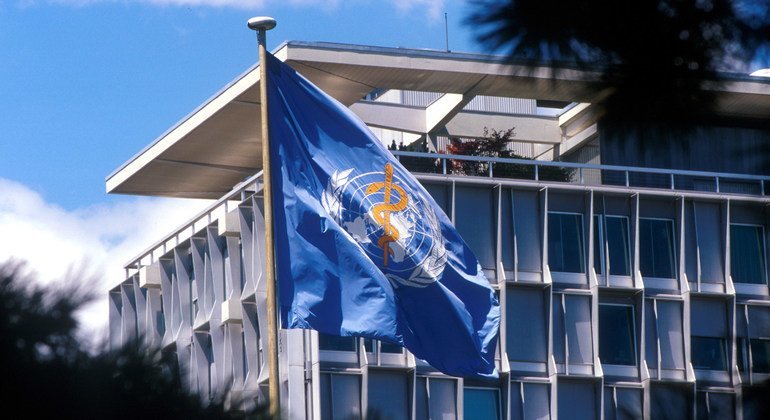
As US funding evaporates, China- the second most powerful actor in the current international system, responds in what at best is a tepid one, including more photo ops, than panacea. At the May 2025 World Health Assembly, China pledged $ 500 million over five years to the World Health Organization (WHO), a fraction of the $ 15 billion multilateral shortfall. To begin with, its 2024-25 WHO contribution was just $ 180 million, as compared to the US’s $ 700 million pre-cut figure. In 2023, China’s total global health aid stood merely at $ 783 million, which was barely 5% of the pre-cut US figure, with China projecting itself as a responsible actor of the international system in the meantime!
Because of the actions of the most powerful actors of the international system, which claim to be responsible ones–be it the US or China, what the world now witnesses is the dismantling of a fragile infrastructure, that has tried to ensure better health and access to health for millions of people across the globe. What now looms large as a threat is a cascade of health perils that threaten not just the poorest countries, but also global stability, with projections of over 14 million excess deaths by 2030, including 4.5 million children under the age of five, What the world now stares at is the grim math of interrupted treatments, shuttered clinics and unchecked outbreaks.
An example of this is from polio eradication, which has been a near success story, saving about 10 million children from paralysis. However, 200,000 paralytic cases could now emerge annually without vaccines. Tropical diseases like dengue and chikungunya, had also been curtailed by 90%. Nevertheless, cases will now rebound, while diarrhoeal and respiratory infections, tied to water and nutrition aid could claim 7.9 million more child lives by 2040.
Maternal and child health, which are always the first casualties, are now crumbling. An 88% cut to these programmes, has reversed two decades of progress. Maternal mortality is already up 23% from undetected HIV, malaria and diabetes, and it is poised to surge further. Aid reduction in Afghanistan for example, has cripped maternity services, and led to skyrocketing complications from haemorrhage and preeclampsia. In Yemen, the cholera crisis is exacerbated by airstrikes, and aid shortfalls, and it now risks infecting millions more, as sanitation and water projects come to a halt. Across the 13 hardest hit countries, like Chad, Sudan and Somalia, 300 million people face a $ 25 billion humanitarian gap, fuelling malnutrition, which weakens immunity and amplifies all diseases.
If this is the story of aid cuts from the most powerful country of the international system, the story of hypocrisy around aid, from the second most powerful actor of the international system, i.e. China, is no less gloomy. Much of China’s ‘aid’flows through opaque channels like the China International Development Cooperation Agency (CIDCS), which blends grants with high-interest loans tied to China’s Belt and Road Infrastructure (BRI). For China, ports in Pakistan or railways in Kenya are its goals, not rural clinics, as its model prioritises geopolitical leverage over humanitarian need, often exacerbating debt traps in low- and middle-income countries (LMICs), which are already reeling from aid gaps. All of this, while Beijing has ratified key frameworks like the UN Sustainable Development Goals and Paris Agreement, obligating it to support global public goods like health security for example.
The future of the international order looks bleak as the global health time bomb ticks louder when great powers play favourites with their purses. The US has to reverse its isolationism, while China needs to embrace genuine multilateralism, over mercantilism. Recipient countries, donors and civil society need transparency and should demand the same, perhaps through a revamped G20 health compact, tying aid to verifiable outcomes.
This article is authored by Sriparna Pathak, professor, China Studies and International Relations, Jindal School of International Affairs, OP Jindal Global University, Sonipat.
link