Having a car unlocks the seemingly endless freedom of the open road — and the inevitability that something will eventually leave you stranded on the side of it, wishing you had an emergency car kit packed. Unexpected car trouble, an accident that’s not your fault and traffic when you’re running on empty are all unpredictable setbacks. Having emergency preparation supplies in your vehicle can keep a situation that’s simply annoying from turning into one that’s potentially dangerous or even life-threatening.
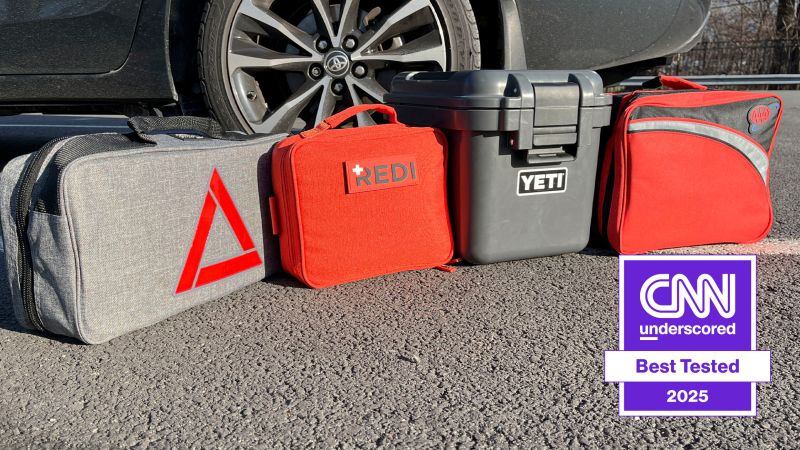
But what exactly belongs in an emergency car kit? The answer varies depending on where you’re driving and what your needs are. I talked to experts in highway safety, vehicle preparedness and emergency medical response to learn which contents drivers should prioritize, then got my hands on four kits that best fit the bill.
Each can help deal with trouble in its own way — I’ll get into the recommended use cases for every kit later — but one emergency car kit packs the most value. Here’s why I’m keeping it in the trunk of my car, even though it’s branded toward road warriors.
Best emergency car kit
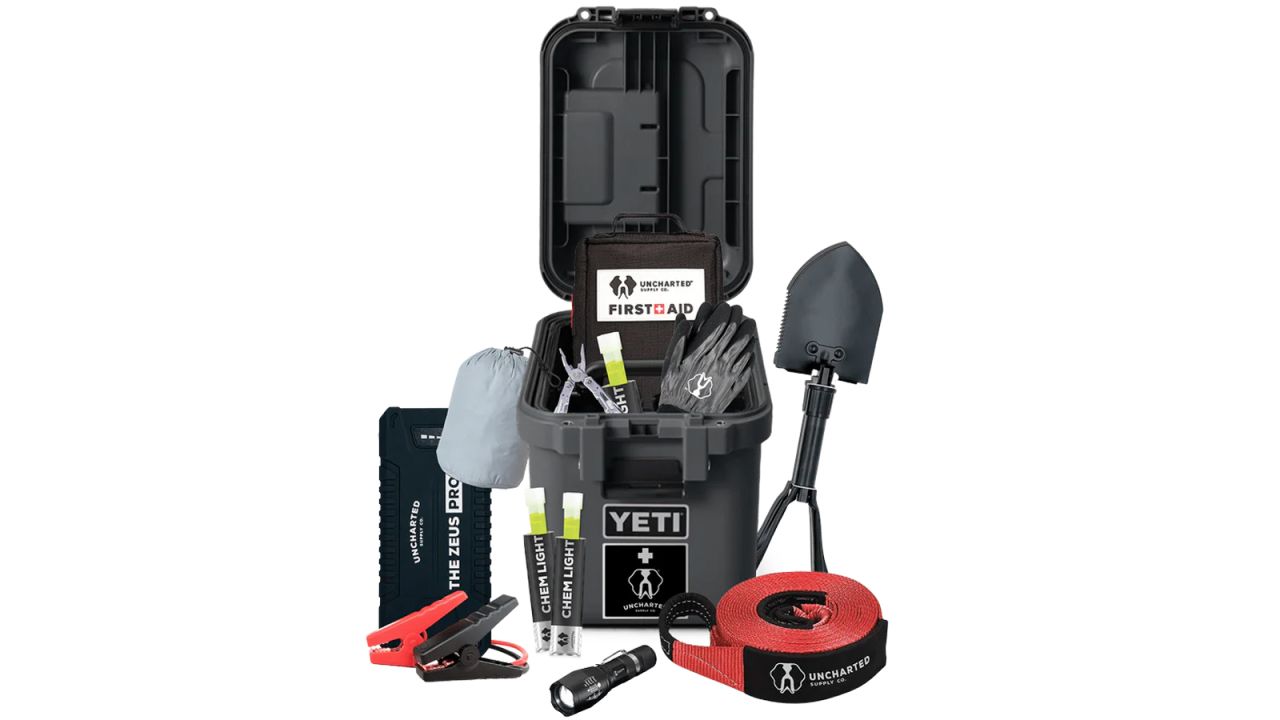
The Overlander’s rugged, comprehensive loadout neatly arranged in a Yeti gear case is a must for anyone regularly traveling long distances or through harsh conditions. If your drives are local and ordinary, it’ll better prepare you for common problems than cheaper options.

-
55-piece first-aid kit
-
Waterproof windbreaker
-
Tactical flashlight
-
Foldable carbon steel shovel
-
Stainless-steel multitool
-
Jump starter
-
Tourniquet
-
Tire inflator
-
Escape tool
I went into testing thinking The Overlander was priced too high to justify a place in my small sedan that rarely strays from the suburbs. In the end, I came away with the belief anyone can reap enough value from what this emergency car kit packs. It doesn’t matter if you’re lugging around a fifth-wheel RV or a toddler, you’ll get your money’s worth.
For starters, The Overlander is housed in a Yeti Loadout 15-Liter GoBox. It’s a solid, waterproof gear case that won’t get destroyed in an accident, and you certainly won’t ever lose it or forget about it (remember, in a perfect world, you’re hardly using this kit). While it might feel like overkill to store everything in a $125 box, the organization within works perfectly, and its durability is a harbinger of the quality you’ll find inside.

Flip open the lid’s latch to reveal a top caddy stashing Uncharted Supply Co.’s First Aid Pro, a waterproof windbreaker, a powerful LED flashlight and a stainless steel multitool. The first aid kit is thorough. Its bifold case opens to various bandages and gauze neatly laid out and clearly labeled. Also in this compartment are shears, tweezers, gloves and additional sanitation supplies. A CPR kit dangles in the middle of the entire section, and it has instructions on how to administer it to adults and children attached on a permanent tag.
A second compartment within the kit is empty, ready for personal medical supplies and add-ons. I could see it being useful for epi-pens, preferred medication and a tourniquet. It would have been nice to see a tourniquet already included — our experts’ advice zeroed in on being able to stop bleeding as the number one most important task in medical emergencies — but Uncharted Supply Co. says it doesn’t include tourniquets (even though it sells them) because uneducated users do further harm if they deploy them improperly.
Beneath the top caddy is another layer of supplies. You’ll find three glowsticks, good for passively illuminating yourself or your car if you’re stranded; thick, insulated gloves with fitted cuffs and textured grip; a collapsible shovel with a saw blade on one edge, great for digging out of snow; a tow strap rated at 17,600 pounds (way more than enough to pull out a big truck like an F-150 or Silverado); and a battery jump starter, Uncharted Supply Co.’s Zeus Pro.
Every piece of the Overlander was more premium and durable than what the competition packed. Instead of jumper cables, which need another car or power source to help boost you, the Zeus Pro can get you started by itself (it can also charge your phone and laptop with USB-C and USB-A ports). The Overlander’s tactical flashlight put the others we tested to shame, with a far brighter, more adjustable beam. Staying warm is one of the most important survival priorities, and within the Overlander are a waterproof windbreaker and an emergency blanket.
Sure, you’re spending more money on this kit compared to the others we’ve singled out, but you’re also getting way more for it. Purchased separately at full price, the Overlander’s contents would total just over $600. So, while the price is steep, the Overlander’s bundled contents achieve a balance of automotive assistance and life-preserving medical gear that the other contenders couldn’t sniff.

With so many emergency car kits out there, I narrowed down my search for the best one by prioritizing the contents recommended by the experts I interviewed. That brought me down to four kits that were all slightly different. I evaluated each according to the following criteria.
-
Supplies: The count of contents in an emergency car kit can be misleading, as most brands tout each individual piece of a first-aid kit. So what else are you getting? I valued emergency car kits with extensive medical supplies while still packing automotive-specific gear.
-
Quality: An emergency car kit is more than just a checklist — the stuff inside has to be well-made. My findings here were mixed, with some low-cost items still providing serious value, as well as some pricey components feeling unnecessary. In the end, the phrase “you get what you pay for” held true.
-
Layout: When purchasing a prepackaged emergency car kit, the contents need to be arranged in a way that helps users understand what they have and where each item is. I assessed how easily searchable each kit was.
-
Accessibility: Putting an emergency car kit to use can often mean you’re in a stressful, urgent or even dangerous situation. I valued car kits that made grabbing a desired item a straightforward and clutter-free experience.
-
Durability: A lot goes on in a car, and plenty goes into a car. I evaluated the durability of each kit and its contents to make sure it all could withstand bumpy roads and getting buried by other stuff. I also unloaded and refilled each kit to see how its organizational zippers, pouches and straps held up. Where applicable, I sampled pieces that could be used without emergency (flashlights, multitools, etc.) to uncover any flawed construction.
-
Value: Since emergency car kits can range in size, quality and ultimately price, I used the previous evaluation points to determine if a kit presented enough value to meet its cost.
-
Refills: It would be foolish to use the contents of an emergency car kit and then need to start over with a whole new kit, so how easy is it to purchase refills on single-use items such as first-aid supplies?
The road can throw surprising challenges your way, and sometimes the timing feels like it couldn’t be worse. Preparing for the unexpected can go a long way in safely getting you on your way again. To better understand what that preparation looks like in an emergency car kit, and to get an idea of what helpful items are worth stocking in addition to your kit, I prioritized three categories.
Much of what you can do to prepare for car trouble has less to do with buying products and more with precautionary measures. David Bennett, senior repair manager at AAA, recommends never waiting until your fuel gauge hits “E” to refill. “This could be in the winter time, it could be in the summer. It doesn’t matter: If you’re driving along a road and an accident happens and shuts down the road, you’ve got nowhere to go,” Bennett says. “And if all of a sudden you’re out of gas or out of charge on an EV, you’re really stuck.”
But no amount of diligence is going to prevent a flat tire or a dead battery, which Bennett says are the two most common reasons AAA is called out to assist drivers. If you get a flat, don’t drive on it unless you’re escaping danger, as doing so can damage your vehicle. Once you’re off the road and can safely change your tire, your best friend will be an emergency car kit with gloves, a blanket/drop cloth to work on and a flashlight. It’s also smart to be familiar with your vehicle’s wheel lock, jack and spare tire before you ever need them. Deploy reflective markers if you can, because whether you’re on the interstate or a residential road, alerting other drivers of your presence when outside your vehicle is paramount.
Car batteries will typically last three to five years, Bennett says. Mine kicked the bucket last year after six years (flex, I know), and the moment I turned my key in the ignition and heard the sputtering was devastating. I had jumper cables, so a family member could get me started with their car, but all-in-one jump packs are great for when you can’t phone a friend. Our top emergency car kit, The Overlander, includes one in the Zeus Pro. Always read the instructions first. “You could cause a lot of damage if you do it incorrectly, ” Bennett says. “If you’re not comfortable, you can not only damage the electronics of the car, but you could damage yourself. You could hurt yourself.”

Thankfully I haven’t needed it yet, but my battery dying last year is what convinced me to stash this jump starter in my car. It’s also a flashlight and a USB phone charger.

When I got a flat in a crowded area, this USB-C air pump filled my tire enough for me to get to a safe place to swap in my spare. It’s also great for keeping tire pressure at the correct levels year-round.

I’m so paranoid about getting stuck without a snowbrush during winter weather that I keep mine in my car year-round. Better safe than sorry.
Every emergency car kit will have some sort of first-aid kit on board. The Overlander, the best kit I tested, has an extensive and well-organized binder of medical supplies, and another option I recommend is Redi’s The Roadie (more on that below). Whichever kit you buy, it’s important to take stock of what medical supplies it does and does not include.
None of the kits we tested include a tourniquet, but National Association of Emergency Medical Technicians President Chris Way says you absolutely should have one. It’s one of a few life-saving tools he carries everywhere and something drivers should value in addition to basic first-aid supplies. “Things like band-aids and antibiotic cream … and Tylenol, are they important to have? Sure,” Way says. “They’re not going to save your life. CPR, stopping the bleed, keeping somebody who’s cold warm, being able to cool somebody down who is hot — that’s the kind of stuff that you’re going to be able to impact as a bystander.”
One other piece of advice from Way: Know CPR. And if you’re grossed out by going mouth-to-mouth with anyone, don’t fret. Hands-only CPR is now the suggested approach because it can be just as effective as conventional CPR. “If you’re [performing CPR] at a pace of 110 impressions a minute, you’re providing very effective circulation of already-oxygenated blood and that will be the most effective thing,” Way says.
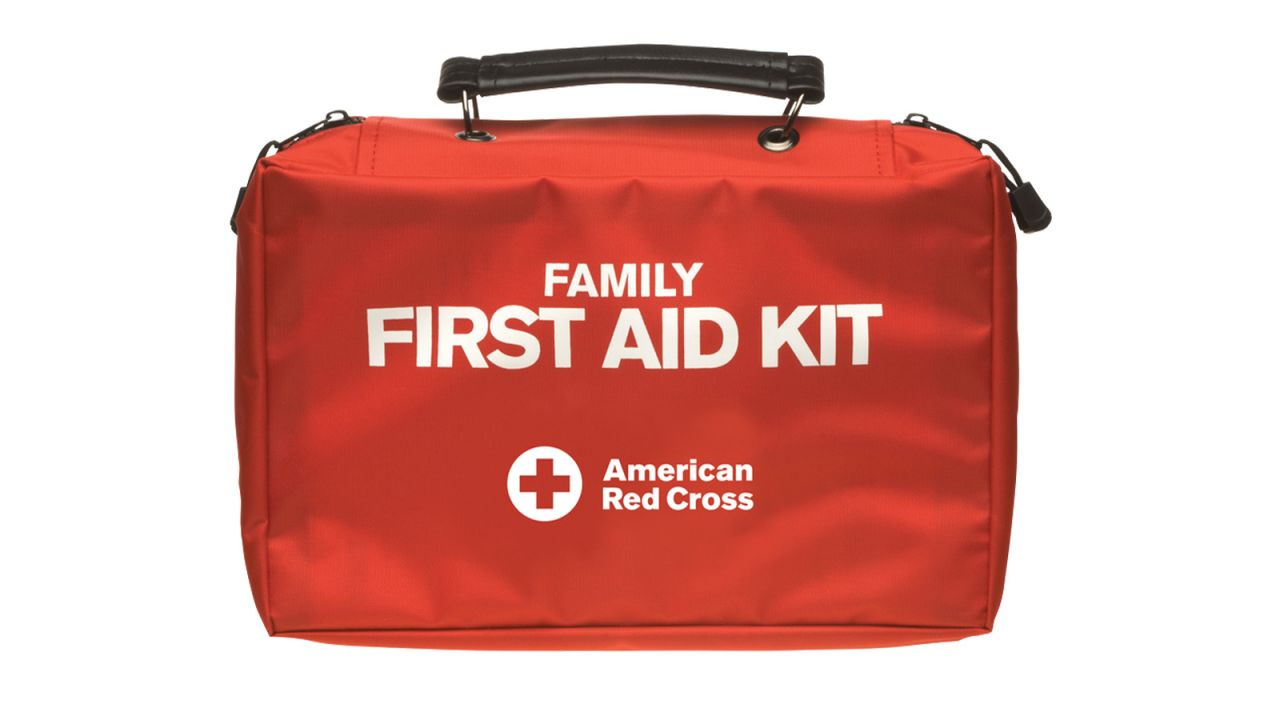
Many of the first-aid kits included in emergency car kits are bare-bones. Having one that goes beyond the basics is a good way to supplement any automotive tools you keep on board.

Stopping someone from bleeding profusely before first responders arrive is one of the most critical actions you can take in a medical emergency. If you buy a tourniquet, learn how to use it.

Way suggests always having gloves in your emergency car kit. They’re a cheap investment that can encourage people to deliver life-saving care without actually touching someone.
Things like road closures, inclement weather and simply getting lost can keep you away from your destination longer than expected. Whether that’s for a few hours or even days, there are several things not stocked in most emergency car kits that are also worth keeping around when you leave home.
Because your phone is the ultimate lifeline — recent iPhones can call for help via satellite even when you have no cell service — bringing an extra portable charger is wise. Maintaining a safe temperature is also key, so bring a blanket and additional layers in the winter and things to stay cool during hot months. If you take medication, carry essential doses. Pack healthy snacks and some bottled water. While it might feel like you’re doing the most for a short drive, it’s important to remember that this is preparation for things out of your control.
Kelsey Mo, a public information officer for the Arizona Department of Transportation, advises to always assume you might not get from point A to point B as quickly as expected. “In case you run into an incident where you’re stranded or … you’re on the road for an extended time, you have those resources on hand to tide you over until you can get to your destination safely or help can arrive,” she says.
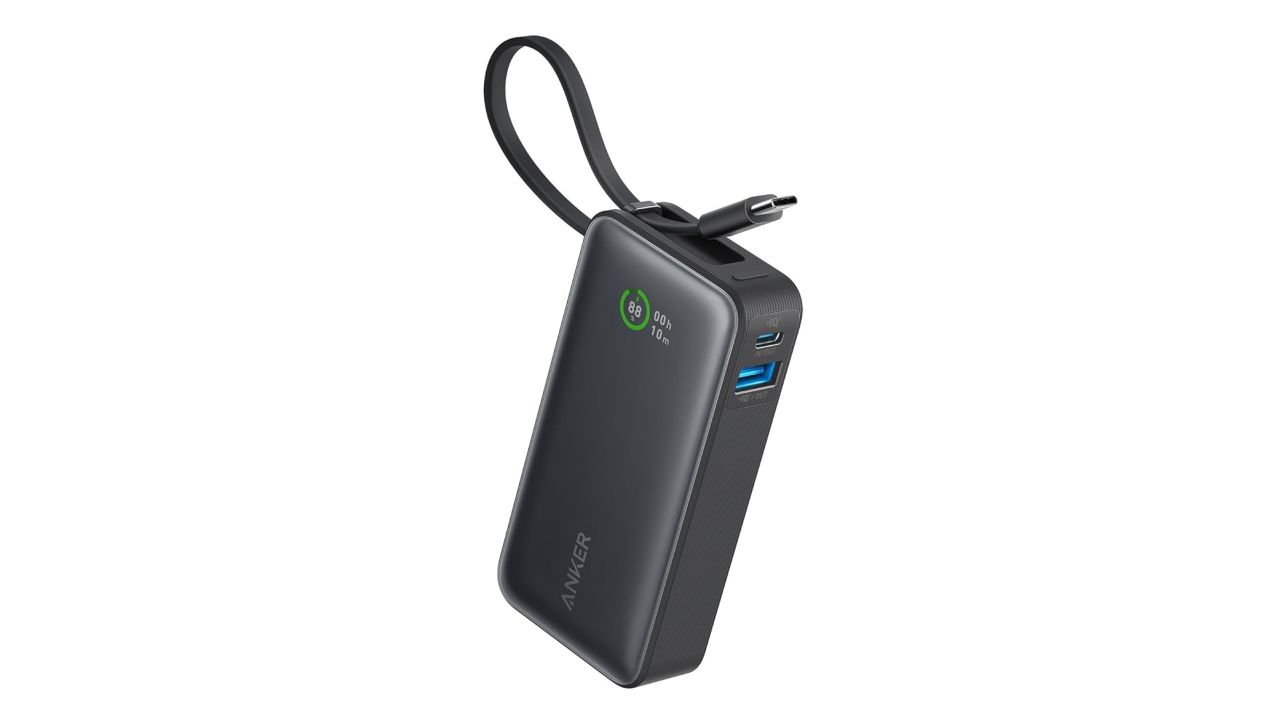
The ultimate path out of a survival situation is a working smartphone. Don’t get stranded on 0% battery.

The warmth of your favorite puffer jacket, but in a blanket. We’re longtime fans of its packability and durability.

A smaller iteration of our favorite soft cooler, this little guy can keep nourishment chilled. Mo recommends tossing in a frozen water bottle during summer.

The Thrive emergency car kit gives travelers first-aid basics, roadside safety gear and several useful tools, all at a price that lets you budget for the additional gadgets and lifesaving items omitted by almost every kit on the market.
-
Escape tool
-
Basic first-aid kit
-
Jumper cables
-
Reflective vest and road triangle
-
Ice scraper
-
Tourniquet
-
Tire inflator
-
Thorough medical supplies
-
Organization
No emergency car kit has every single thing you’ll ever need when you hit the road, but Thrive does a solid job of including pieces that will come in handy when common problems pop up. Dead battery? It has jumper cables. Changing a flat tire? Put on the reflective vest and set out a reflective triangle to give yourself visibility. Got a boo-boo? Its basic first-aid kit comes packed with alcohol wipes, band-aids and tweezers, among other items, but it’s elementary compared to what you get in The Overlander and our next kit, Redi’s The Roadie.

Thrive’s kit, available in a few different zippered containers, also has thoughtful items that will make a difference when needed. Its flashlight is powered by hand, not by battery, so you’ll never have to worry about being stranded in darkness without AAAs. It was the only kit we tested to include an ice scraper, albeit a small one with no reach. Its bit and socket screwdrivers have seven and nine interchangeable heads, respectively. You’ll also get a utility box cutter and a foldable multitool. These tools are great to have, just know you’ll feel why this kit was only $50.
Thrive was the only kit that included an escape tool. On its surface, this seatbelt-cutting, window-shattering gadget could be the difference between life and death when your car is about to go up in flames or sink into a lake. It sounds absurd, I know, but it happens: The National Fire Protection Association estimated in a 2024 report that nearly 650 people died from vehicle fires each year from 2018-2022. AAA has studied the success of escape tools made for these exact situations. Unfortunately, the one included in the Thrive kit failed their tests. You’re better off with the spring-loaded Resqme escape tool.

The Roadie is a perfect companion to any vehicle already outfitted with car-specific supplies like a jump starter and tire inflator. It only packs medical supplies, but it does it supremely well.
-
Extensive wound treatment supplies
-
Medication
-
Glucose and electrolyte packs
-
Instant cold pack
-
Flint fire starter
-
Anything specific to car trouble
-
Tourniquet
If the price of our top pick scares you off, your best bet might be leaning on the jumper cables you may already own while opting for The Roadie, a mid-priced kit that goes all-in on first-aid in a way that blows the competition out of the water. While The Overlander does have a comparably thorough first-aid kit, the units inside the budget-priced Thrive and AAA emergency kits we tested are apples to oranges next to The Roadie. Redi’s baseline offering is superior in every way.
The organization of The Roadie is impressive because it’s still easy to find contents even though this bag is jam-packed with medical essentials. Each category, such as wound prep and medication, is color-coded in its own baggie. They’re nested within netted pockets so everything is visible when the entire kit is unfolded, and you’ll have your choice of refills once you run out.
Then there’s the sheer quantity of items The Roadie has. Among the list of items it contains that the competition did not are a disposable urinal, an instant cold pack, a digital thermometer and eight different medications comparable to over-the-counter brand names like Advil and Benadryl.
While many of these inclusions make The Roadie stand out, you’ll have to upgrade to higher tiers of Redi kits to receive truly difference-making gear. The Roadie+ includes everything you’d get in its simpler sibling, plus a “quick-release trauma pack.” Can you put a price on life-saving equipment? Redi does at $350. The $425 Roadie Pro+ takes it further with 250 pieces, a hardshell case and additional interior organization.

A tire inflator and jumper cables will have you ready for the most common vehicular hiccups, though you’ll need to supplement this with additional first-aid gear.
-
Tire inflator
-
Jumper cables
-
Reflective triangle
-
Basic first-aid kit
-
Tourniquet
-
Thorough medical supplies
-
Escape tool
If you’re shopping for an emergency car kit because it’s actual car trouble you’re worried about, the Lifeline AAA 76-piece Premium Excursion Road Kit will help in that area. It has a 12-volt air compressor, reflective triangle and a pair of gloves, so you’ll be well-equipped to deal with a flat tire. Jumper cables require an assist from another power source, but at least you know you have a path forward from a dead battery.
While those items are useful (the other kits we tested didn’t include a pump for tires), this AAA kit lacks medical and survival supplies. Its first-aid kit doesn’t go past the bare minimum of minor wound treatments. It has nothing to keep you warm if you’re stranded without heat. And though AAA recommends an escape tool, you won’t find one here.
The 76-piece kit does get points for organization, though. Its two-sided zipper storage is far better than the layout of the Thrive kit, which is a big mess every time I open it.
For this article, I consulted the following experts to gain their professional insights.
-
David Bennett: Now the manager of repair systems at the American Automobile Association, which he joined in 1986, Bennett is AAA’s go-to expert for automotive repair and driver safety.
-
Kelsey Mo: Mo leads safety communications for Arizona’s Department of Transportation as a public information officer.
-
Chris Way: A licensed paramedic since 1994 and a certified firefighter, Way is the 2025-2026 president of the National Association of Emergency Medical Technicians (NAEMT) and the fire chief of Kootenai County, Idaho.
CNN Underscored editors thoroughly test all the products we cover and provide full transparency about how we test them. We have an experienced team of writers and editors who have many years of testing experience and ensure each article is carefully edited and products are properly vetted. We talk to top experts when it makes sense to ensure we are testing each product accurately and speaking about the pros and cons of each item. For this article, we spoke to experts in vehicle maintenance, travel preparedness and emergency response to assemble a packing list for an emergency car kit.
The writer of this guide, associate testing writer Joe Bloss, has been a licensed driver for over 12 years. A number of the products in this guide have been stashed in his car for years, and he’ll be leaning on the peace of mind provided by the addition of these kits to the trunk of his Toyota Corolla. Bloss has tested and reviewed other automotive products for Underscored, including Drop Stop car seat gap fillers and the best car vacuums.
link
About the Author