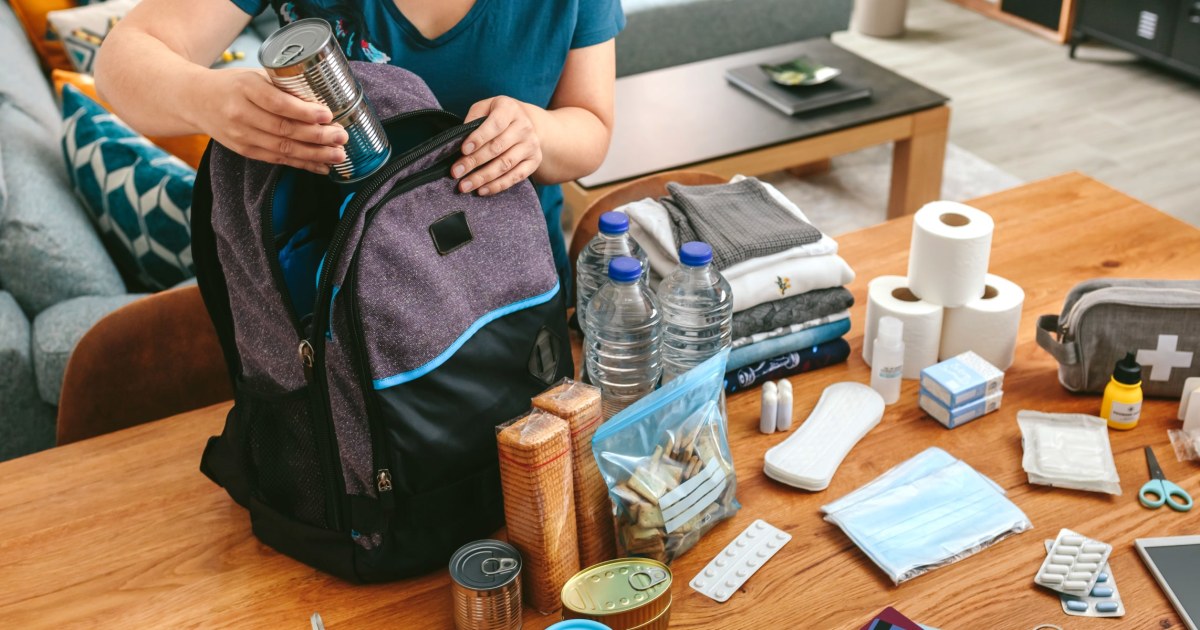
A first aid kit is only as useful as what’s inside it. At the very least, you’ll want the basics for wound care: bandages in several sizes, sterile gauze, antiseptic wipes, antibiotic ointment, and gloves. “Those items form the backbone of any kit,” says DeWitt. She adds that trauma scissors, elastic wraps, and a CPR mask are worth including whenever possible. Here are a few key things to think about when purchasing a first aid kit.
What’s included? Where many people go wrong is assuming more pieces equal more protection. DeWitt has packed hundreds of kits for homes, hospitals, and clinics, and she’s blunt about what she often sees: “Most people are purchasing fluff that does nothing when it matters.” Flimsy adhesive bandages that peel away in minutes or tweezers that bend under pressure can create more stress in an emergency. In her view, a compact kit that is stocked with fewer — but quality — items beats a bloated box filled with supplies that break or expire quickly.
Is it organized? How a kit is organized is just as important as what it contains. In a real emergency, you don’t want to dig through a pile of supplies. Labeled compartments or color-coded pouches make it easier to grab what you need fast.
Size matters. A large kit makes sense for home or workplace use, but if it’s too bulky to carry, it won’t help much in your car or backpack. “Think about your use case and be realistic with what you’ll actually keep on hand,” says Vollmer. “A giant kit may cover every scenario, but if you leave it in a closet, it won’t be there when you need it.”
Does the kit fit your family’s needs? Personalization is another step nurses emphasize. If your household includes children, older adults, or people with chronic conditions, it’s smart to add extras like chewable acetaminophen, electrolyte packets, or glucose tabs. DeWitt also recommends keeping an emergency medication list in a waterproof pouch, along with copies of key health details such as family members’ allergies and current prescriptions. In some cases, specialized tools like Narcan, an epinephrine injector, or even a portable pulse oximeter may be worth including. “There’s no one-size-fits-all kit,” DeWitt notes. “Better to customize so it matches your actual needs.”
link