Living and working on a farm brings a unique blend of beauty and danger. As both an ER nurse and a dairy farmer’s wife, Katie Hammock has witnessed the stark realities of what can happen when farm accidents occur. The tight-knit agricultural community feels every tragedy deeply, and with the right tools and training, some of these outcomes could be different, she says. This realization led her to a mission to educate, equip and empower farm families and agriculture businesses to prioritize safety and be ready before disaster strikes.
A Blend of Nursing and Farming
Hammock didn’t grow up on a farm. Instead, she was raised in the suburbs of Ottawa, Canada, with family ties to dairy farming in Pennsylvania and New York, which sparked her passion for agriculture. Eventually, she found herself in Southern Virginia for college, where she met her husband, a third-generation dairy farmer. Today, her husband and his family milk 900 cows and farm 1,000 acres while she continues to work as an ER nurse in one of Virginia’s Level 1 trauma centers. This unique combination of experiences fuels her drive to advocate for farm safety.
“I’ve spent my career as an ER nurse, treating the worst of the worst — life-threatening injuries, trauma cases and far too many farm accidents,” she says. “After seeing too many preventable tragedies and realizing there wasn’t a farm emergency kit that met our needs, I decided to do something about it. I created my own. And from there, my mission grew — to educate, equip and empower farm families and agriculture businesses to be ready before disaster strikes.”
Building the Ultimate Farm First Aid Kit
Farm accidents are often sudden and severe, and emergency response times in rural areas can be delayed. One lifesaving tool Hammock advocates for is the tourniquet, which can stop critical bleeding in case of severe injuries. It’s inexpensive, easily applicable, and can be critical in the precious minutes before professional help arrives. Having tourniquets and other emergency medical supplies readily available can mean the difference between life and death.
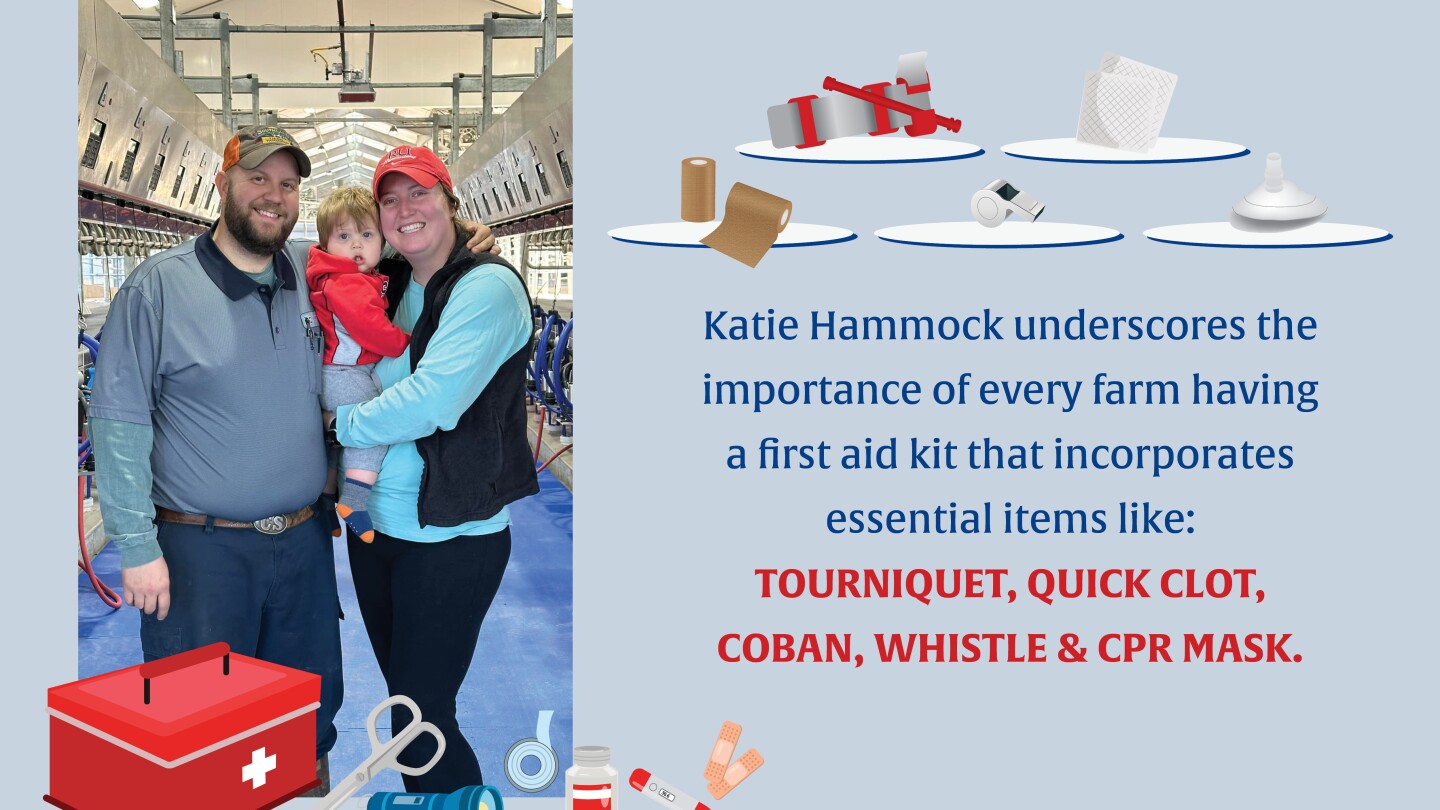
“If it’s a serious enough accident, it can take fewer than five minutes to bleed out,” Hammock says, underscoring the importance of every farm having a first aid kit that incorporates essential items such as:
1. Tourniquet: Stops critical bleeding.
2. Quick Clot: Clots blood rapidly in areas where a tourniquet can’t be applied.
3. Coban: Maintains pressure on injuries. Similar to vet wrap.
4. Whistle: Helps call for help when phone service is unavailable.
5. CPR Mask: Facilitates safe CPR in case of medical emergencies.
Common Farm Injuries and the Need for Safety Protocols
Farm work involves many hazards that can lead to injuries, such as tractor rollovers, chainsaw accidents and animal-related injuries. While safety protocols and slowing down can prevent some accidents, awareness and preparation for when accidents occur are equally crucial. It’s essential not to become complacent with routine tasks and always maintain vigilance.
Encouraging a Preparedness Mindset
When Hammock speaks to farm communities, the feedback is overwhelmingly appreciative. Many people haven’t considered farm safety from the perspective of an ER nurse who sees the aftermath of these accidents. Emphasizing preparedness, having a farm emergency kit and maintaining open communication about farm safety rules are vital steps.
“The difference between an accident and a tragedy is truly milliseconds,” she says, acknowledging that injuries happen regardless of how careful someone is. “So being prepared for when those accidents happen is very important.”
Safety and Boundaries for Children on Farms
Children’s safety on farms is a particularly sensitive and crucial topic. Each family must establish non-negotiable rules to prevent tragedies. On Hammock’s farm, for instance, their 2-year-old son has strict boundaries regarding riding on open cab tractors and lawnmowers. Such rules are grounded in the firsthand knowledge of what can go wrong.
While prevention remains the best strategy, being prepared for accidents is vital. Hammock urges all farm families and workers to invest in the knowledge, tools and protocols necessary for farm safety. Understanding the possible injuries and having a response plan can ultimately save lives. For resources like a free farm address organizer, visit: thedairywife.com.
Your Next Read: Young Award-Winning Dairy Producer Maximizes Cash Flow with Hot Dairy Cow Market
link