Hidden fat may quietly harm arteries, even in healthy-looking individuals.
A new investigation from McMaster University has uncovered that hidden fat stored deep within the abdomen and liver may quietly harm the arteries, even in individuals who seem perfectly healthy.
The study, published in Communications Medicine on October 17, 2025, questions the long-standing dependence on body mass index (BMI) as the main measure of obesity. It also provides new evidence about how unseen fat within the body can contribute to heart disease.
Visceral fat (the type that surrounds internal organs) and hepatic fat (fat stored in the liver) have long been associated with higher risks of Type 2 diabetes, high blood pressure, and cardiovascular disease. However, their direct connection to artery health has not been well understood.
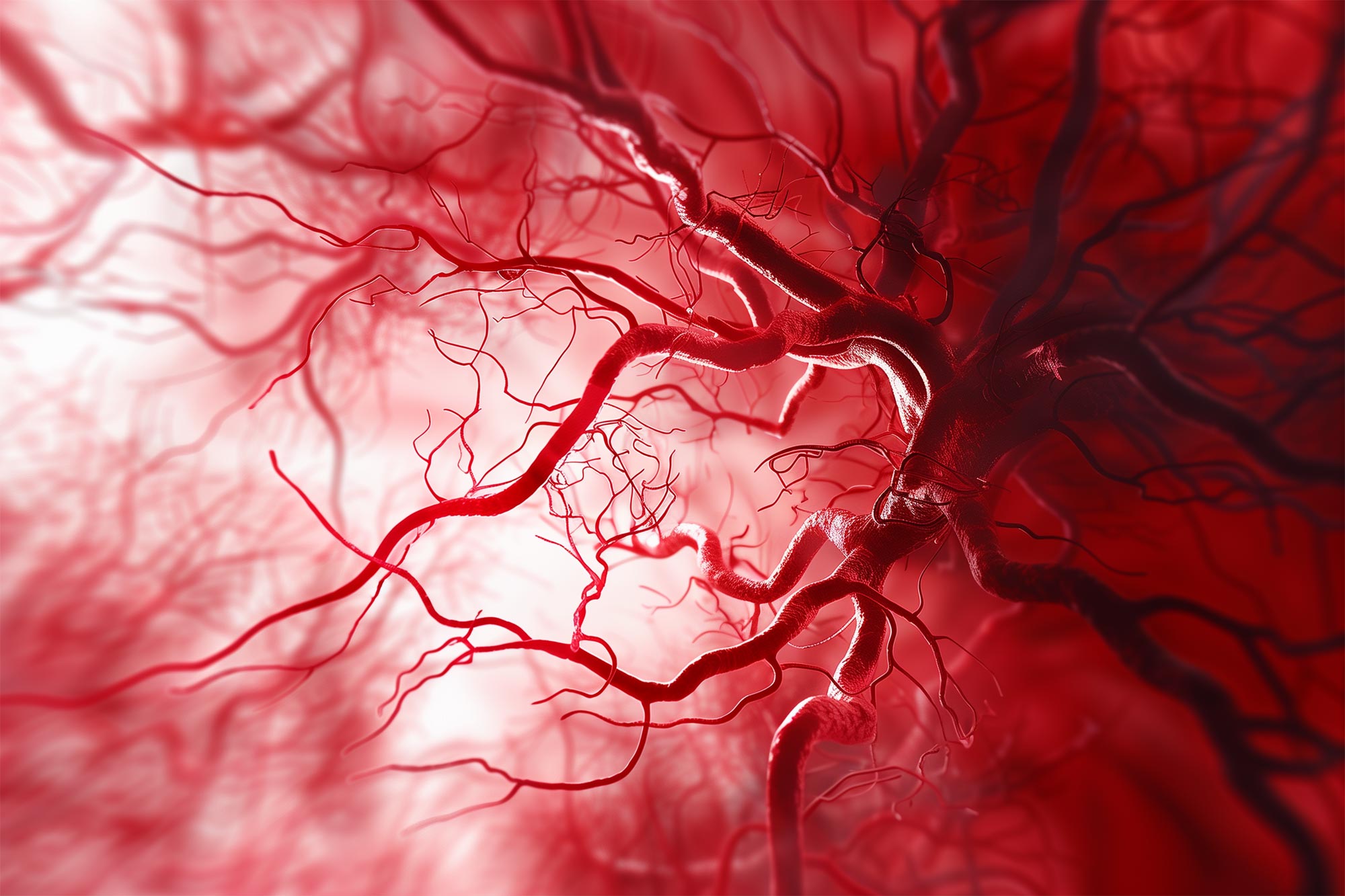
Drawing on advanced MRI scans and health data from more than 33,000 adults in Canada and the United Kingdom, researchers discovered that both visceral and liver fat are closely linked to the thickening and buildup of plaque in the carotid arteries of the neck. These arteries carry blood to the brain, and their narrowing is a major warning sign for stroke and heart attack.
Hidden Fat and Artery Damage
“This study shows that even after accounting for traditional cardiovascular risk factors like cholesterol and blood pressure, visceral and liver fat still contribute to artery damage,” says Russell de Souza, co-lead author of the study and associate professor in the Department of Health Research Methods, Evidence, and Impact at McMaster.
“The findings are a wake-up call for clinicians and the public alike,” says de Souza, a faculty member in the Mary Heersink School of Global Health and Social Medicine, and member of the Centre for Metabolism, Obesity and Diabetes Research (MODR) and at McMaster. de Souza led the study with Marie Pigeyre, associate professor in the Department of Medicine at McMaster.
The research team analyzed data from two major cohorts: the Canadian Alliance for Healthy Hearts and Minds (CAHHM) and the UK Biobank, using MRI scans to measure fat distribution and artery health. They found that visceral fat was consistently associated with carotid plaque buildup and artery wall thickening, while liver fat showed a weaker but still significant link. Importantly, these associations held even after the researchers adjusted for lifestyle and metabolic risk factors.
Rethinking How We Assess Obesity and Risk
The implications are far-reaching. For clinicians, it underscores the need to go beyond BMI and waist circumference and consider imaging-based assessments of fat distribution. For middle-aged adults, it’s a reminder that hidden fat, not just visible weight, can silently increase cardiovascular risk.
“You can’t always tell by looking at someone whether they have visceral or liver fat,” says Sonia Anand, corresponding author of the study, a vascular medicine specialist at Hamilton Health Sciences and professor in the Department of Medicine at McMaster. “This kind of fat is metabolically active and dangerous; it’s linked to inflammation and artery damage even in people who aren’t visibly overweight. That’s why it’s so important to rethink how we assess obesity and cardiovascular risk.”
Reference: “Visceral adipose tissue and hepatic fat as determinants of carotid atherosclerosis” by Russell J. de Souza, Marie E. Pigeyre, Karleen M. Schulze, Amel Lamri, Baraa K. Al-Khazraji, Philip Awadalla, Joseph Beyene, Dipika Desai, Jean-Pierre Despres, Trevor J. B. Dummer, Matthias G. Friedrich, Jason Hicks, Vikki Ho, Éric LaRose, Scott A. Lear, Douglas S. Lee, Jonathon A. Leipsic, Guillaume Lettre, Alan R. Moody, Michael D. Noseworthy, Guillaume Pare, Grace Parraga, Paul Poirier, Jean-Claude Tardif, Salim Yusuf, Jennifer Vena and Sonia S. Anand, 17 October 2025, Communications Medicine.
DOI: 10.1038/s43856-025-01123-y
This research was supported by the Canadian Partnership Against Cancer, Heart and Stroke Foundation of Canada, and the Canadian Institutes of Health Research, with additional contributions from the Population Health Research Institute, Montreal Heart Institute, Sunnybrook Health Sciences Centre, and others. MRI reading costs were supported in-kind by Sunnybrook Hospital, and Bayer AG provided IV contrast. The study also drew on data from the Canadian Partnership for Tomorrow’s Health and the PURE Study.
Never miss a breakthrough: Join the SciTechDaily newsletter.
Follow us on Google, Discover, and News.
link
About the Author