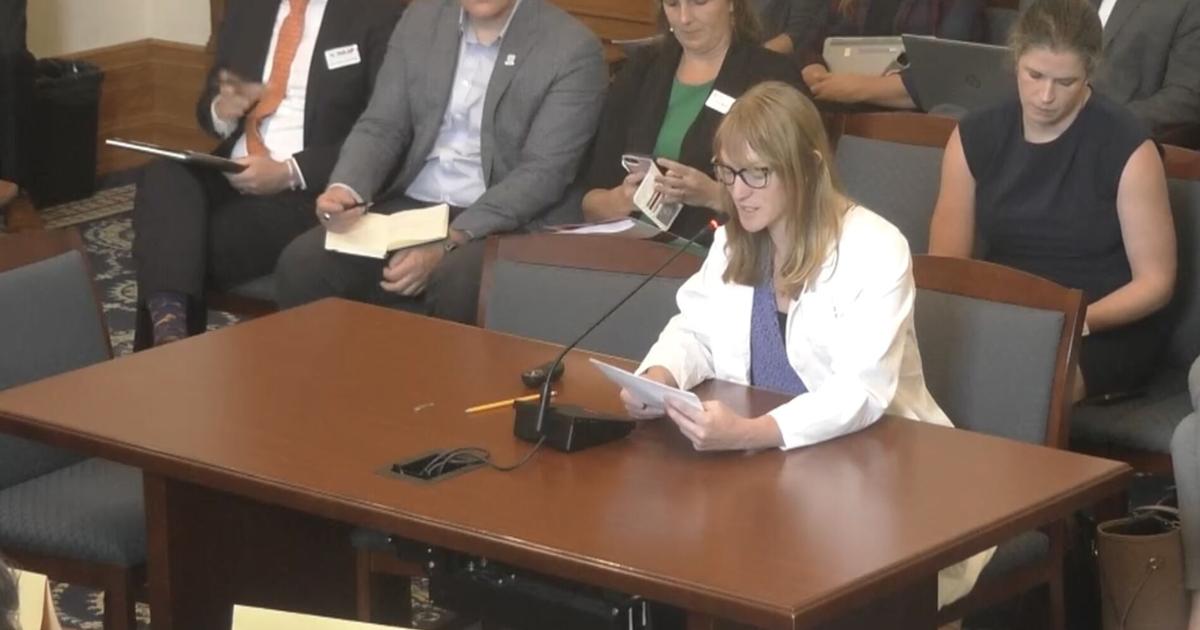
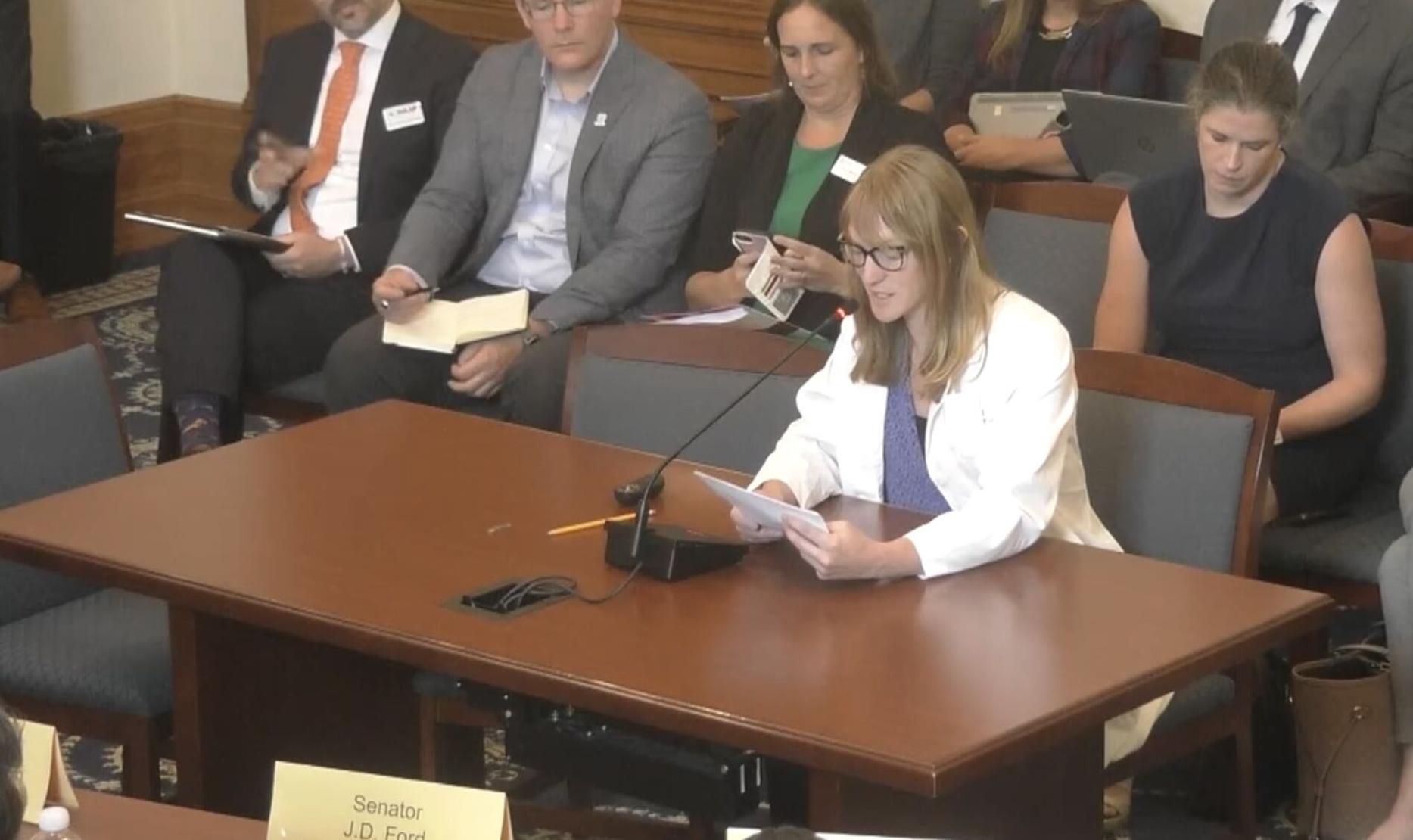

Dr. Alison Case, a family medicine physician with the Indiana Academy of Family Physicians, speaks to the Interim Study Committee on Public Health, Behavioral Health, and Human Services on Thursday.
The Interim Study Committee on Public Health, Behavioral Health, and Human Services met Thursday to hear from several professionals in the field of maternal and postpartum care, who shared statistics and relevant information ahead of the next legislative session.
A key topic throughout the meeting was the maternal resources available in other states that many professionals feel should be introduced in Indiana.
Kendall Speer, a policy specialist for the National Conference of State Legislatures, presented information focused on maternal mental health and how protocols from other states could be effective here.
“Wisconsin’s prenatal care coordination is a Medicaid benefit that provides medical, social and educational support and services during pregnancy and up to 60 days postpartum,” she noted.
“Arkansas’ Life360 program provides intensive support to women with high-risk pregnancies who are Medicaid beneficiaries. These intensive supports are provided up to two years postpartum, and home visitors screen for health-related social needs and connect patients to community supports and health services,” Speer continued.
Advocates also discussed postnatal care for mothers. Julie Schneiders, executive director of St. Vincent Women’s Services, has 48 years of health-care experience. In her testimony, she noted the positive effects of emergency-room care as a tool for postpartum mothers.
“We need to focus on emergency rooms. There’s a lot of care going on in those emergency rooms because of the maternity (care) deserts that are happening,” she said. “We are trying to do things about educating our emergency room people about everything that goes on in a pregnancy.”
Dr. Alison Case, a family medicine physician with the Indiana Academy of Family Physicians (IAFP), sees patients from “newborn to geriatrics.” According to Case, family physicians provide care to over one-third of pregnant patients in Indiana and offer continuous care for patients and their families at all stages of life.
“Because family medicine focuses on continuity of care and the care of the family as a unit, we have a unique perspective on postpartum care,” she said.
Case, alongside the IAFP, recognized the hardships that mothers face to afford appropriate medical care for themselves and their children.
“We know that Medicaid recipients more often suffering from chronic conditions are especially vulnerable. The American Academy of Family Physicians and the Indiana Academy of Family Physicians recognize that lack of insurance coverage, as has been mentioned by other folks here today, is a major barrier to access to care during the postpartum period,” she explained.
As the committee moves forward, several chair members indicated a strong interest in exploring legislation that would expand postpartum care. The next meeting for the Interim Study Committee on Public Health, Behavioral Health, and Human Services is scheduled for Oct. 15.
Chloe White is a reporter for TheStatehouseFile.com, a news site powered by Franklin College journalism students.
link