Every home needs a dedicated first aid kit, even if it’s only used to organize the supplies scattered in medicine cabinets, drawers and cupboards, making it much easier to grab them in a stressful situation. Whether you’re dealing with a spreading wildfire, a weather emergency like a hurricane or just a skinned knee, an organized, complete kit can let you treat minor injuries quickly and effectively. It’s as much of an essential piece of emergency gear as the best flashlight, solar generator or emergency radio.
To find the best first aid kits to keep in your home, car or with you while traveling, I tested 17 popular kits, ranging from pocket-size containers to backpacks full of survival gear. I also consulted with an expert at the Red Cross to understand how to choose the right first aid kit for any situation.
Best first aid kit
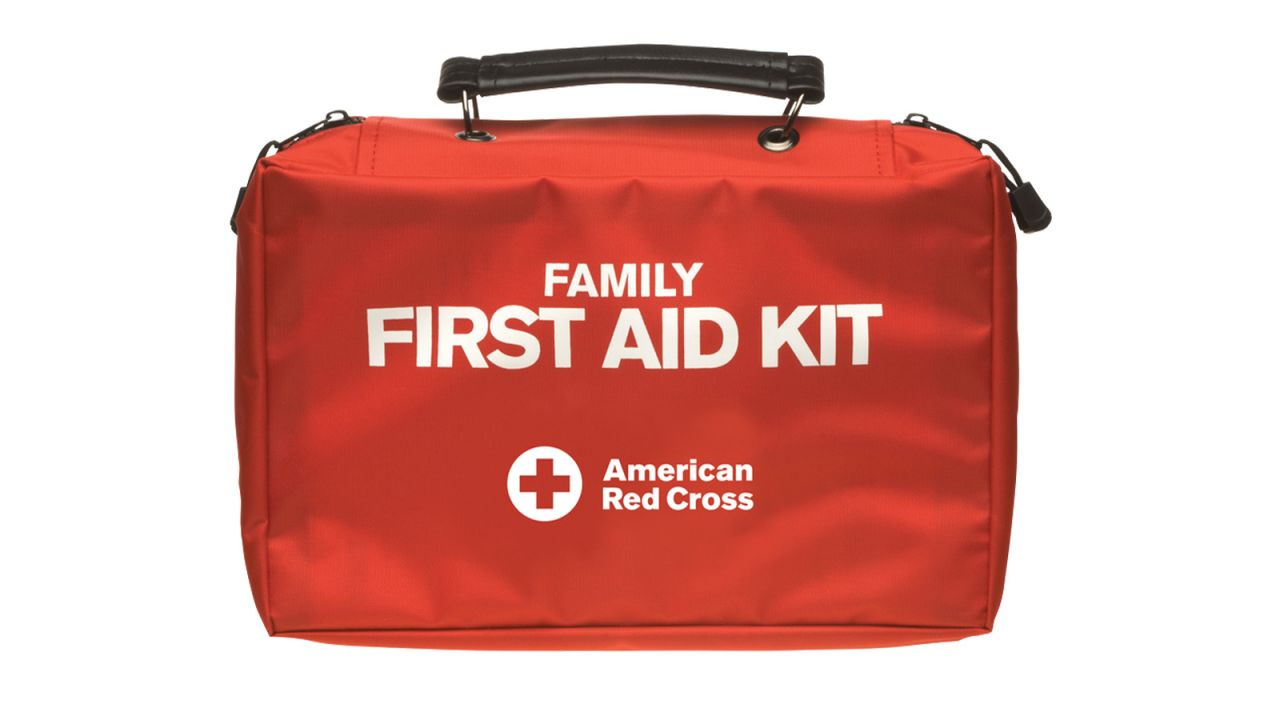
An easy-to-use ring-binder-style design, high-quality products and all the essentials recommended by the Red Cross make the Red Cross Deluxe Family First Aid Kit everything you need.
Best budget first aid kit
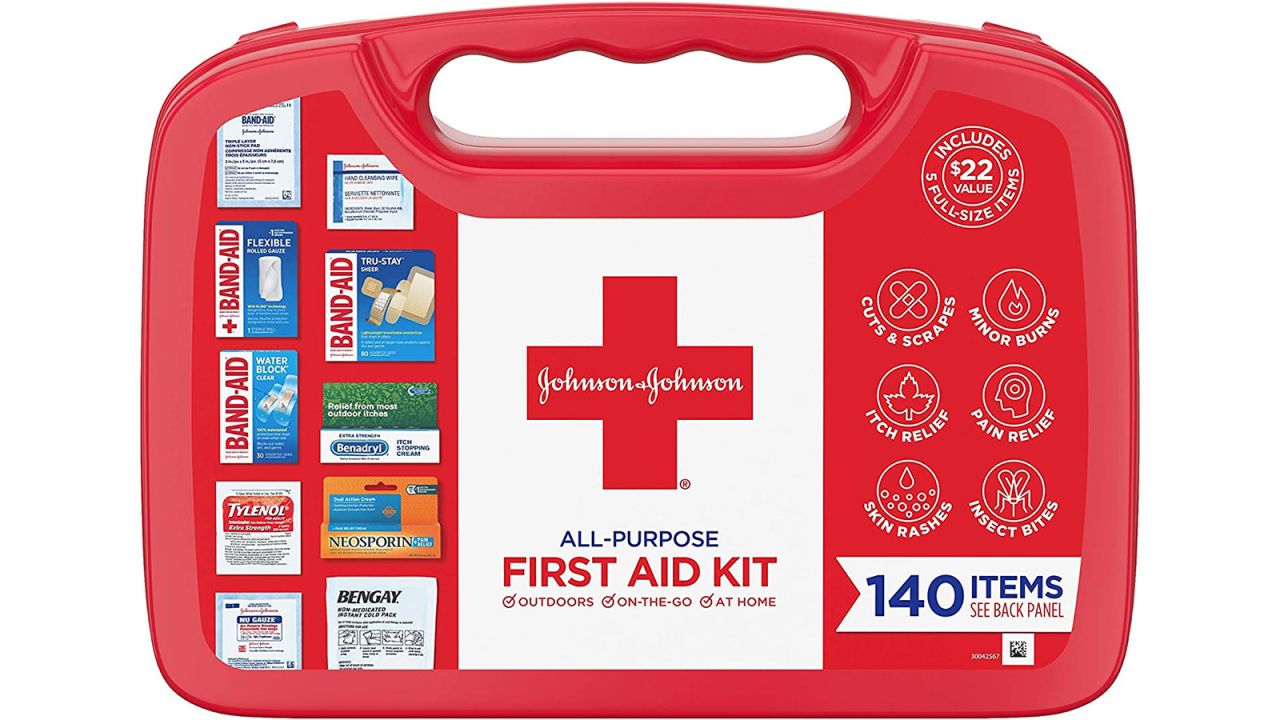
Don’t let the rock-bottom price of the Band-Aid Johnson & Johnson First Aid Kit fool you; it provides a useful collection of name-brand items packed securely in an easy-to-transport case.
Best first aid kit for camping
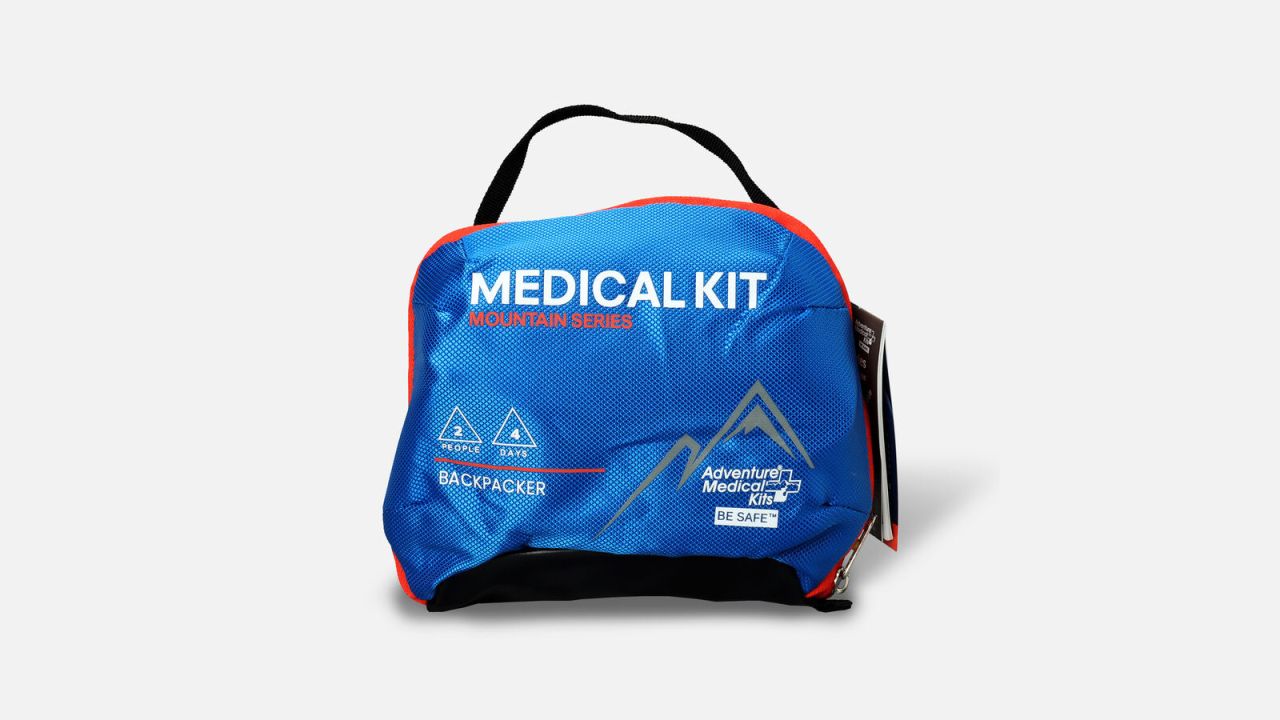
In addition to basic supplies for household use, the AMK Mountain Series Backpacker Medical Kit is lightweight, prioritizes organization and includes several items specifically for treating common hiking, backpacking and camping issues.
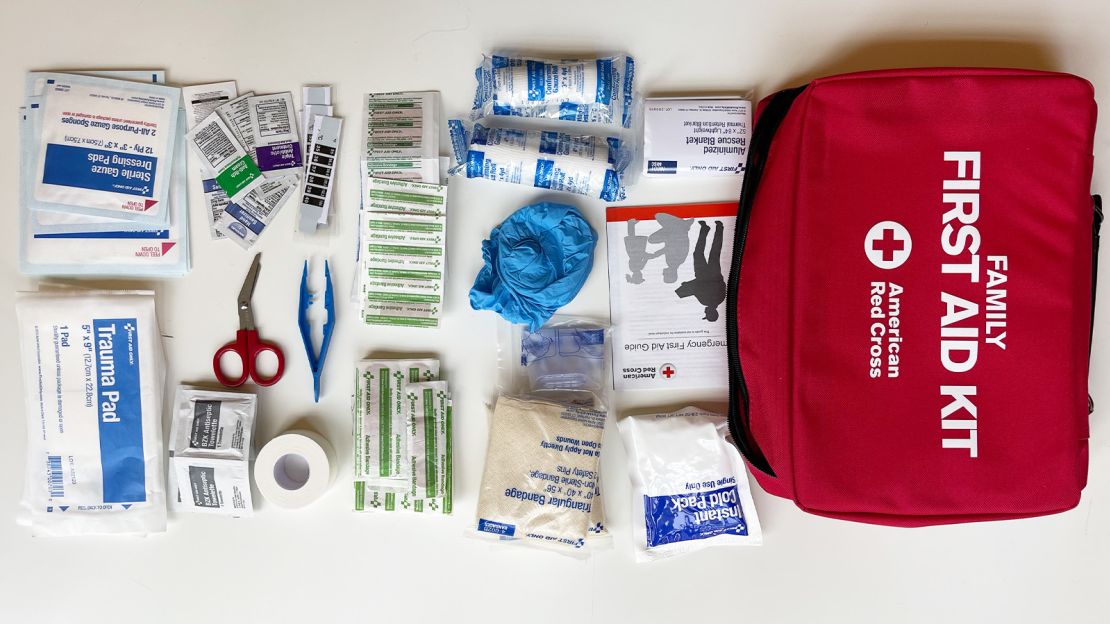
With a heavy-duty case and a variety of high-quality items inside, the Red Cross Deluxe Family First Aid Kit was a no-brainer as my top pick. Right out of the box, I noticed how rugged and well-made the case felt, complemented by metal grommets and sturdy zipper pulls. A wide handle also made it convenient to carry around the house during testing. I’m also a big fan of the bright red color, which makes it easy to spot in a cluttered car trunk or backpack.
What sets this kit apart from the other models I tested was its ring-binder-style design. Once unzipped, the contents are displayed in clear vinyl pockets that you flip through to find the item you need. This design also allows it to lie flat like a book when in use, and the extra-large sleeve pouches at the front and back of the kit are large enough to store other emergency documents, such as allergies or specific medical issues for a family member. When it comes to clear organization and quick, easy access to first-aid items in an emergency, it doesn’t get much easier than this.
Its focus on providing clear, concise first-aid instructions and information was another factor that set this kit apart from the rest of the pack. In addition to a manual that includes straightforward instructions on dealing with common medical emergencies like choking, stroke, seizures and cardiac issues, the kit also includes several extra-large info sheets. These sheets are presented in large, clear pockets on the left-hand side, with their corresponding first aid items on the right-hand side as you flip through.
This kit was also one of only three other kits I tested that provided all the essential items recommended by Red Cross expert, Jeffrey L. Pellegrino. It also included two pairs of non-latex exam gloves, which, as the Red Cross explains, allow you to change gloves if needed, or for a second responder to help out at the same time. I was also impressed with the overall quality of the 115 pieces. The 1-inch-by-10-yard tape roll was a particular standout, and along with the bandages and dressings, held up well during hands-on testing. Although the scissors were relatively small compared to the EMT-style shears found in other kits, they had no trouble cutting through the tape or trimming gauze.
The durability, usability and variety provided by this kit make it just as useful in your cupboard as a go-to home first aid kit as it would in the trunk of your car or backpack on a camping trip.
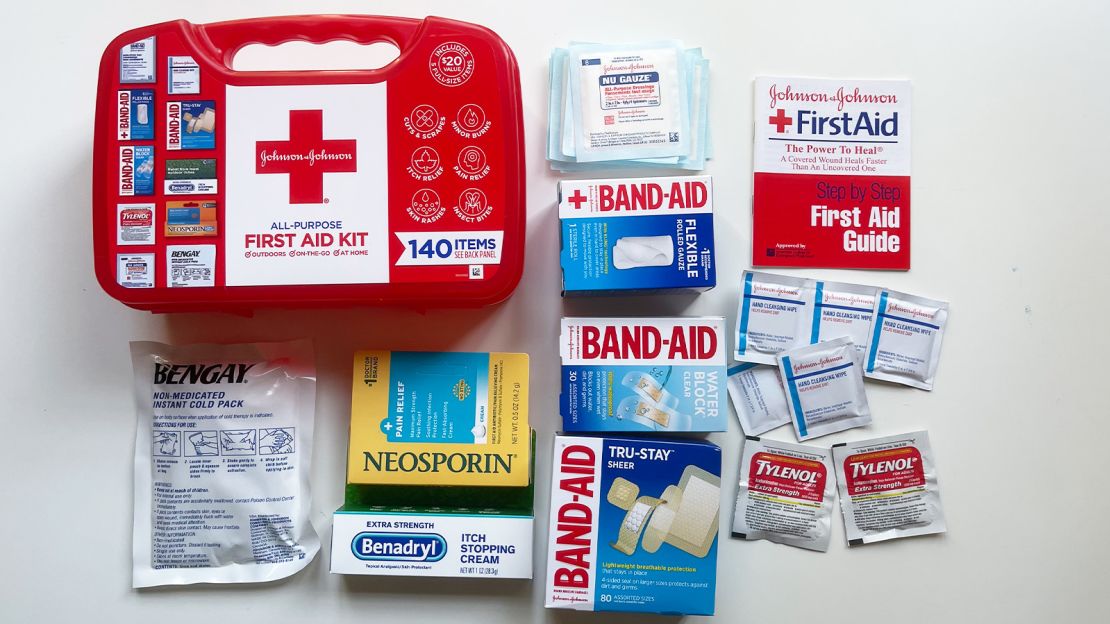
While the Johnson & Johnson First Aid Kit doesn’t have the quantity or variety of most other options, its rock-bottom price makes it a great choice for those on a budget. I’m honestly not even sure exactly how this kit can be priced this low, considering the bandages alone are worth almost 75% of the kit’s cost, and it still includes eight other products. A durable plastic case keeps everything safely inside, and the oversized handle makes it easy to carry from place to place.
Although there aren’t any spacers or organizational elements to this kit (it’s essentially a big lunch box), it was easier to find what I wanted than in many other kits. Since nearly every item is included in a separate box, there aren’t a hundred small pieces floating around needing to be organized into sleeves or pouches. When you’re finished with the bandages, or Neosporin, or gauze, you put the rest back in its box and toss it back in the kit.
All the bandages performed well in testing too, especially the Water Block Band-Aids that stayed put even after washing the dishes. The included Red Cross manual is a great resource that covers a wide range of emergency situations and the necessary steps to treat them effectively.
I want to be clear that this kit does not include all the essentials recommended by the Red Cross, such as gloves or a CPR face shield. It also lacks a pair of tweezers, so you’ll probably want to add those separately. That said, the pieces this kit includes are well thought out and all high-quality, name-brand products, making it a practical kit to have on hand for common first aid situations.
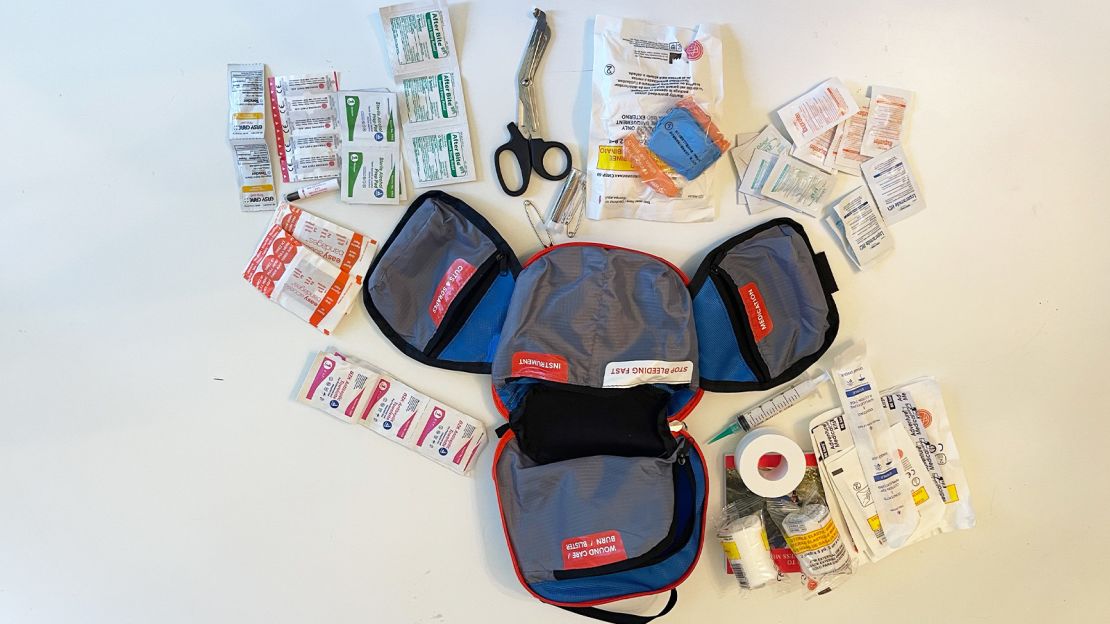
What makes the AMK Mountain Series Backpacker Medical Kit so great is that, even though it’s designed to be convenient and functional for backpacking and hiking, it’s also versatile enough to be used in your home or stashed in your car for emergencies. Except for a CPR face mask, it provides everything recommended by our Red Cross expert, along with an impressive variety of bandages, including knuckle and butterfly options.
My favorite aspect of this kit is its unique design, which unzips to reveal four distinct storage pouches, each labeled with the contents’ general purpose. This organizational layout could come in extremely handy when out on a trail or campsite, where you don’t have a convenient surface to unload your kit and find what you need. The semitransparent material helps even more, giving you a sense of what’s inside each pouch before you unzip it. A fabric handle on top even allows you to hang it from a branch while you work, making things even easier.
What makes this kit specifically useful for outdoor adventurers, in addition to the well-organized design, are the items most useful for those who may not have immediate access to a pharmacy or health care facilities. Things like insect bite wipes, Diamode tablets for treating diarrhea, moleskin for blisters and a large plastic syringe for irrigating wounds are not always found in first aid kits. A pair of heavy-duty EMT-style shears — as opposed to cheaper, flimsy scissors — could also come in handy for cutting moleskin, or clothes to help make a tourniquet or splint.
Another great feature of this kit, as with the other two AMK kits I tested, is the first-aid manual. This “Guide to Wilderness Medicine” was by far the most comprehensive and helpful manual I found during testing, and with so much information, it would be invaluable if you found yourself in an emergency while away from roads or the ability to call for help.
Most first aid kits seem fairly similar, making it tough to confidently choose the best one. Although I’m not a licensed first responder, I did my best to evaluate and compare each kit using criteria based on research and from interviews with experts in the field, as well as hands-on testing of each kit’s components. I evaluated the first aid kits in our testing pool based on the following criteria.
-
Essential contents: I interviewed and consulted an expert on the essentials that should be included in a first aid kit, as well as other factors to consider when choosing one. I cross-checked each of my kits with his recommendations, noting which items were missing or of poor quality.
-
Ease of use: Proper ease of use is essential for first aid kits, enabling you to use them effectively and efficiently. I evaluated how convenient and straightforward each first aid kit was to use, noting how easy they were to open, find what you want, repack when finished and close back up.
-
Kit organization: Being able to find items quickly is essential in an emergency, so your kit must be well organized. The easier it is to repack everything when you’re finished, the less hassle and headache you’ll have when it’s time to use the kit next time. After opening each kit, I went through its compartments, pockets, sleeves and other organizational elements, noting how easy it was to locate individual items and how thought-out the overall design layout was.
-
Durability: A first aid kit should be durable enough to withstand a moderate amount of wear and tear without ripping, cracking or coming apart. While using each kit, I paid close attention to its overall sturdiness and durability when it came to straps, clasps, zippers and closures.
-
Quality of products: I applied bandages and tape to my hands and arms, noting how well the adhesive performed; tested any single-use thermometers; tore open antiseptic wipes to ensure they weren’t dried out; and put on any examination gloves or masks. I paid close attention to the build quality and materials of any tools or instruments, such as tweezers and scissors, and found a broader range in quality than I expected. While some kits provided high-quality EMT shears and metal tweezers, others used cheap, flimsy scissors and plastic tweezers.

A first aid kit should contain everything you need to treat a variety of common first aid ailments and injuries. Unfortunately, there are a ton of first aid kits on the market, and all of them seem to have a different idea of what exactly should go inside. To simplify things, I consulted with Jeffrey L. Pellegrino, a senior advisor to the American Red Cross Scientific Advisory Council and a professor of emergency management and homeland security at the University of Akron. He shared five essential items you should make sure are in your first aid kit:
-
First aid guidebook
-
Triple antibiotic ointment
-
Non-latex gloves
-
A breathing barrier to prevent transmission of disease while performing rescue breaths
-
An assortment of self-adhesive bandages, gauze, roller bandages and adhesive tape
It’s worth noting that just because a first aid kit doesn’t include all these items, it doesn’t mean you should automatically write it off as inferior. If it’s missing one or two components, then feel free to purchase them separately. Pellegrino added that any kit specifically for children should “include any lifesaving medications (epinephrine, inhalers, etc.) that a child might need.”
Pellegrino recommends asking yourself the following questions to help determine the best kit for you:
-
How many people does the kit need to serve? A kit for seven people on a kayaking trip needs to be larger than one for a few family members at home.
-
What are the types of injuries you can expect? You’ll want to be prepared for more serious injuries on a camping or backpacking trip than a day at the amusement park.
-
What else do you have to work with? If you have other supplies to work and improvise with, you can keep the size and weight of your first aid kit down.
-
Where will it be stored? First aid kits and their contents are susceptible to the environment, “so where and how you store it is important to it being useful,” Pellegrino said.
You need a first aid kit because it keeps all your medical supplies together in one place, so if an emergency does occur, you’ll be able to act quickly. If you or a family member needs first aid, you aren’t going to feel like hunting around your house looking for bandages in the bathroom drawer, your desk for a pair of scissors, the medicine cabinet for antibiotic ointment and so on. A first aid kit is also portable, so if someone crashes their bike in the driveway or suffers a campfire burn in the backyard, you can grab it and be confident you have everything you need.
If you’re out of your house on a hike, camping trip, soccer practice or scout outing, then a first aid kit is even more important. Even relatively minor injuries can become serious issues if you have to wait until you reach a hospital or civilization to get treatment. This will also prevent you from having to improvise with unsanitary or inappropriate items that aren’t meant for treatment. A sterile bandage will be much more effective in the long run than a dirty handkerchief or a sweaty T-shirt.
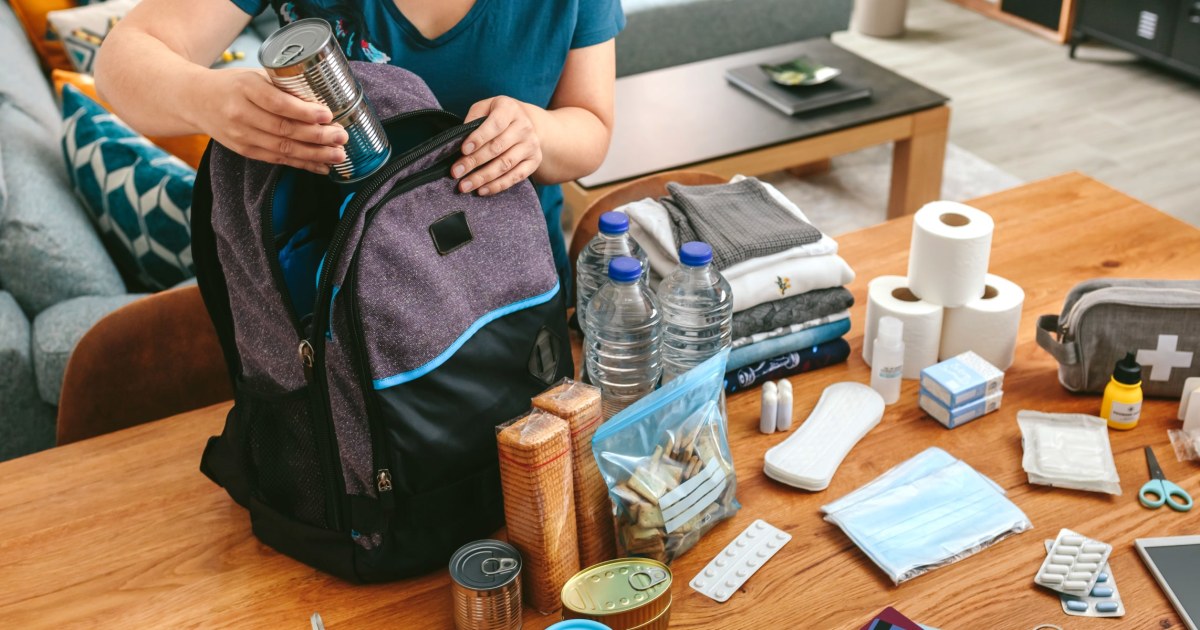
A first aid kit is also an important piece of an effective emergency or disaster kit, which is a larger, more comprehensive kit meant to prepare you for a weather or natural disaster. In this case, you may not have access to a hospital or an ambulance for some time, making an effective first-aid kit even more important to have on hand.
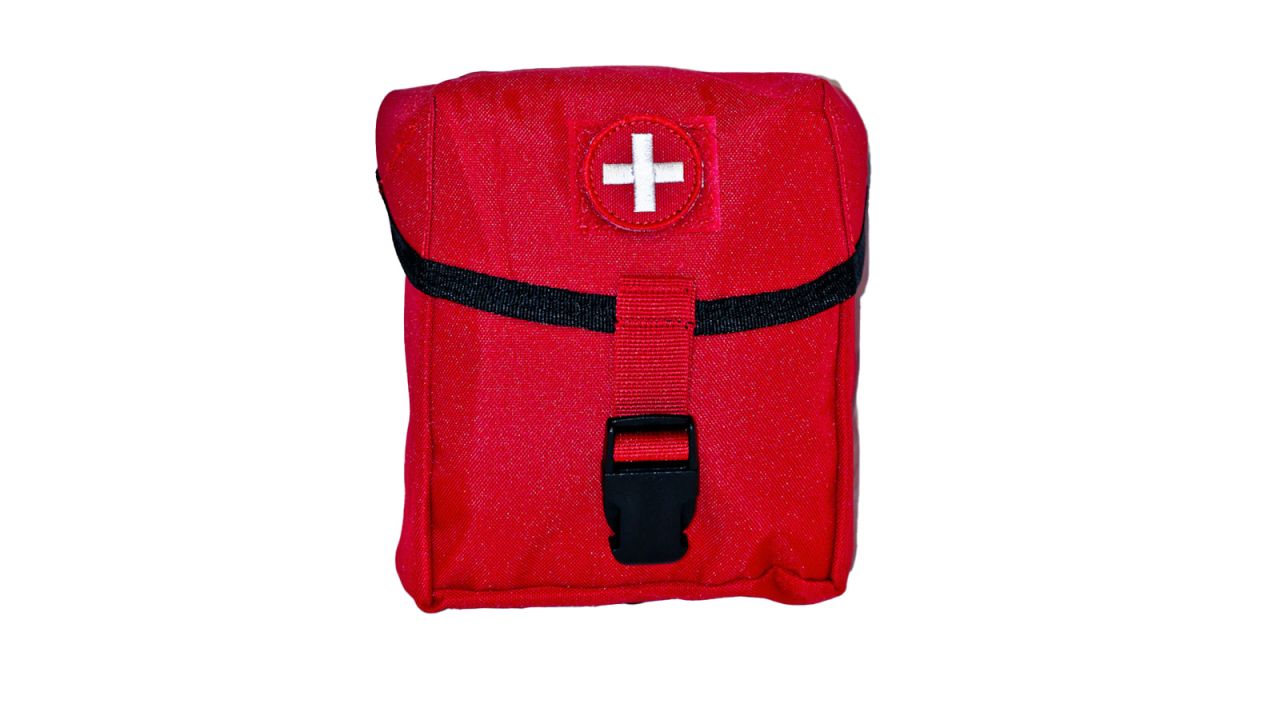
If you’re looking for a kit that’s more focused on treating serious, traumatic injuries, then the Doom & Bloom Ultimate Compact Grab N’ Go First Aid Kit is probably the option for you.
This kit includes several emergency items that weren’t found in any other kit, including a heavy-duty elastic tourniquet, an Israeli compression bandage and blood-clotting granules. What I liked about this kit is that, in addition to a basic first aid and CPR manual, it includes a large instructional sheet that walks you through the steps to treat and control severe bleeding. This sheet uses large images and short, straightforward instructions, which is exactly what you want when your adrenaline is pumping and you don’t have time to flip through an entire book. Even the tourniquet has easy-to-follow instructions printed directly on it, clearly indicating how tight to apply it.
The quality of all the items in this pack was all legitimate, name-brand products, too, unlike some obscure or knockoff items I’ve seen in lower-quality kits. The high price, relatively small amount of light-duty bandages and lack of a CPR face mask ultimately kept this kit out of our top spot, but if those aren’t a deal breaker for you, this is a fantastic kit.
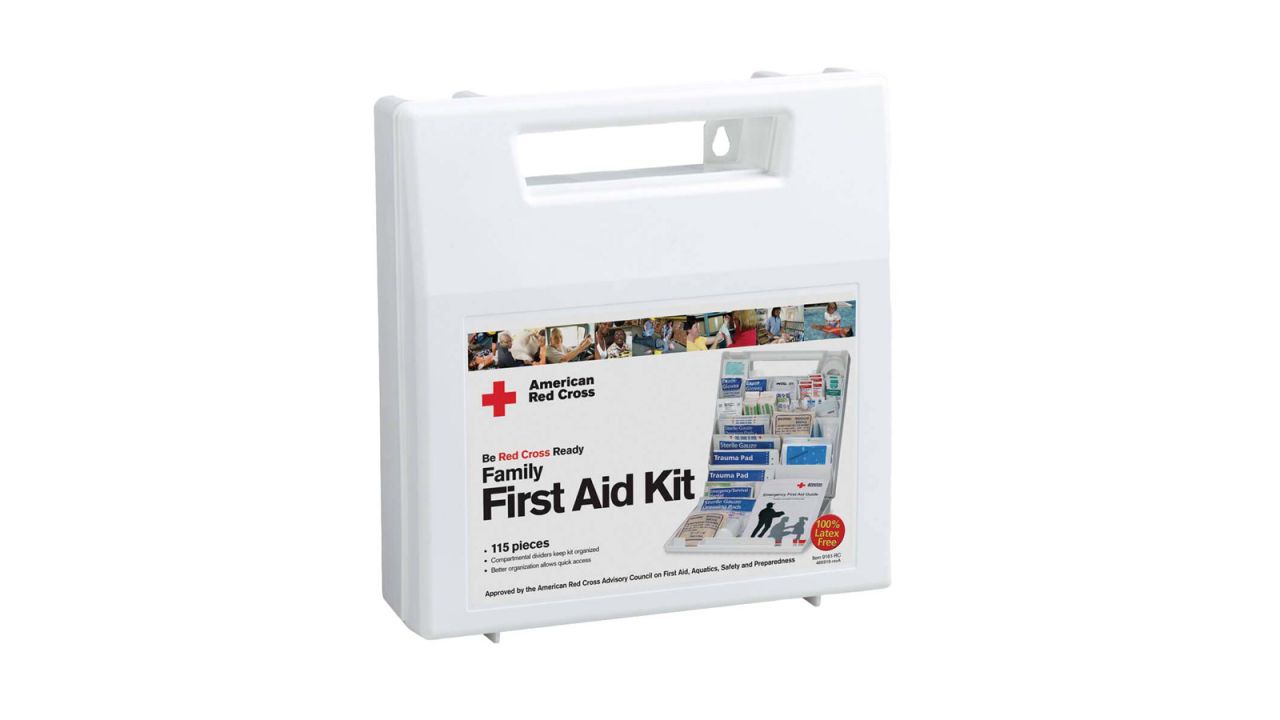
The relatively bulky size of the American Red Cross Family First Aid Kit isn’t the most convenient for those with limited space or those who plan on stashing their kit in their backpack or glove box, but its variety of essential items makes it a good basic option to have on hand at home or a job site.
The most valuable feature of this kit is that it includes all the items recommended by the Red Cross, a feature shared by only two other kits I tested. It also has a good selection of bandages and sizes, as well as extra-large sterile trauma pads and conforming gauze rolls, essential for minimizing blood loss during serious emergencies. A pair of triangular bandages and safety pins is also convenient for making a makeshift sling.
Two pairs of gloves were a nice perk, as most kits provide only a single set. I was surprised to see that the only medication in this kit was a single aspirin packet, whereas almost every other kit provided at least an additional supply of ibuprofen or acetaminophen. The case itself didn’t feel especially durable, though, and I nearly snapped off a hinge clip the first time I tried to open it.
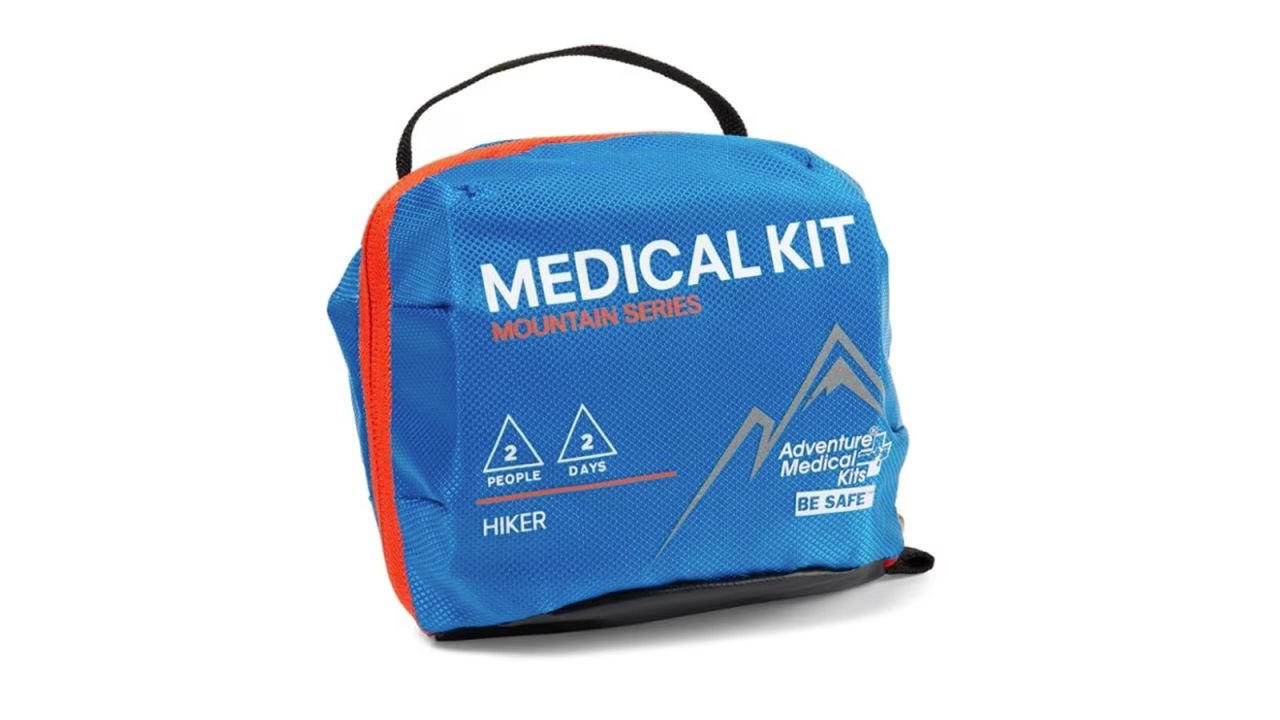
The compact sibling of the AMK Mountain Backpacker Medical Kit, the AMK Mountain Hiker Medical Kit is just as easy to use and has almost as much convenient, hiker-friendly functionality.
Once unzipped, this kit folds open to reveal three separate organization pouches, each labeled with the basic use of the items inside: “Wound Care/Burn/Blister,” “Medication,” “Cuts & Scrapes” and “Stop Bleeding Fast,” which contains a large trauma pad and rubber gloves. To make things even easier, the specific contents of each of these pouches are printed on the back of the kit, so you can locate what you want before you even unzip it.
The comprehensive “Guide to Wilderness Medicine” is a great resource to have on hand while out adventuring, and covers helpful first aid situations like fishhook removal, diabetic emergencies, lightning injuries and altitude illness. In addition to a nice variety of quality bandages, precut moleskin patches and gauze pads, this kit features a nice pair of EMT-style shears and compact metal tweezers. It does lack a CPR face shield, though, so keep that in mind.

The compact Coleman All-Purpose Mini First Aid Kit is small enough to fit practically anywhere — it’s about the size of an Altoids tin — and with just 27 items inside, it’s easy to dump out and pick out what you want without much hassle.
Despite the limited number of pieces, this kit still provides an impressive variety of bandages, such as butterfly, knuckle and spot options, as well as antibiotic ointment. I also appreciated the included razor blade, which, in the absence of a pair of scissors, could be useful for carefully cutting through clothing or for stripping cloth to make a tourniquet.
Considering the extremely low price, there’s no reason not to grab a couple of these to toss into your tackle box, glove box or backpack, but you’ll still need to purchase a full-size kit if you want to be prepared for a wide range of first aid situations.
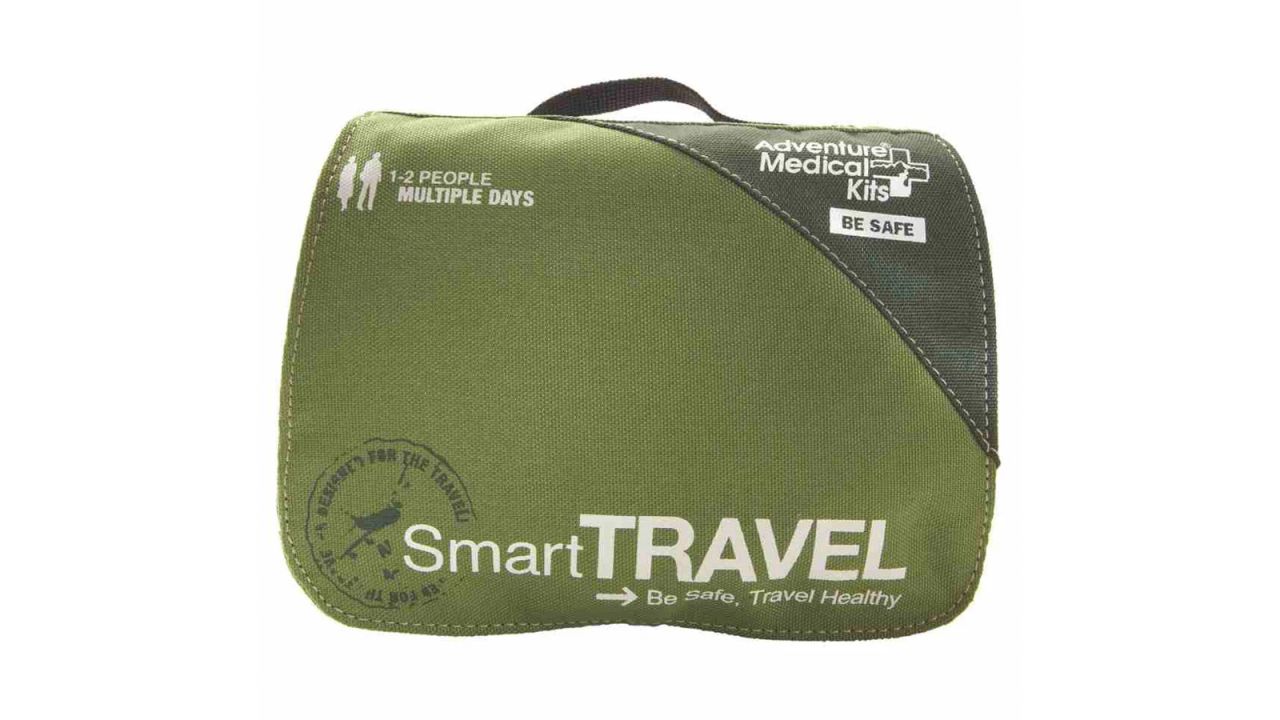
If you’re planning to travel abroad and want to bring a first-aid kit, the AMK Smart Travel kit would be a great choice.
My absolute favorite thing about this kit is its visual indicator diagrams, which allow you to quickly and accurately explain the details of a first aid situation to others, even if you don’t speak the same language. With the addition of its handy pencil and paper, these visual aids can help you transcend any language barriers. I’ve personally struggled to explain the state of an injured hiker up the trail to a native speaker, and tools like these would have made the situation much easier.
The kit itself is also convenient to use, and the transparent sleeves make it easy to find what you’re looking for. It includes a great first-aid manual — just like the other AMK kits — and a nice mix of bandage sizes and styles, as well as moleskin for blister treatment. It doesn’t include a CPR breathing barrier, and it curiously lacks a pair of scissors, which makes it more convenient for air travel.
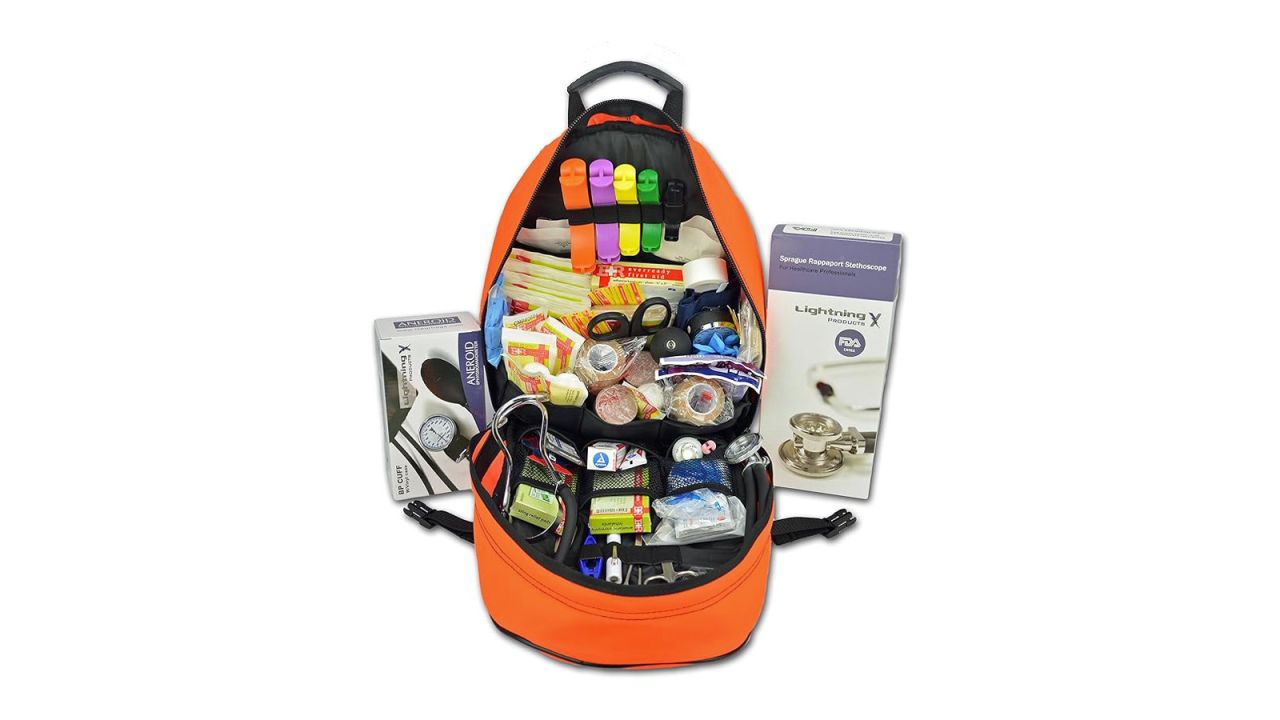
The Lightning X First Responder EMT/EMS Backpack kit probably isn’t for the inexperienced, but if you have the proper training and are confident using professional medical instruments, it could be a good fit.
By including advanced medical supplies like a stethoscope, a blood pressure cuff and a range of oral airway sizes, the items in this kit can be used to monitor and treat serious first aid events, as long as you know how to use them. If you’re not specifically trained in these instruments, you could end up doing more harm than good if you attempt to use them during an emergency. The relatively brief first aid manual makes it even more important that a trained responder use this kit.
We were most impressed with the sturdiness and organization-friendly design of the backpack itself, which features a mind-boggling amount of compartments, pockets, pouches, sleeves and elastic straps. Many of these are located on the exterior of the bag, too, allowing you to store your most used or time-sensitive items within easy reach. The high quantity of items included, in addition to the professional instruments and helpful tools like EMT shears, forceps and a penlight for concussion diagnosis, make this kit a practical choice to have on hand at an event like a sports camp or scout trip.
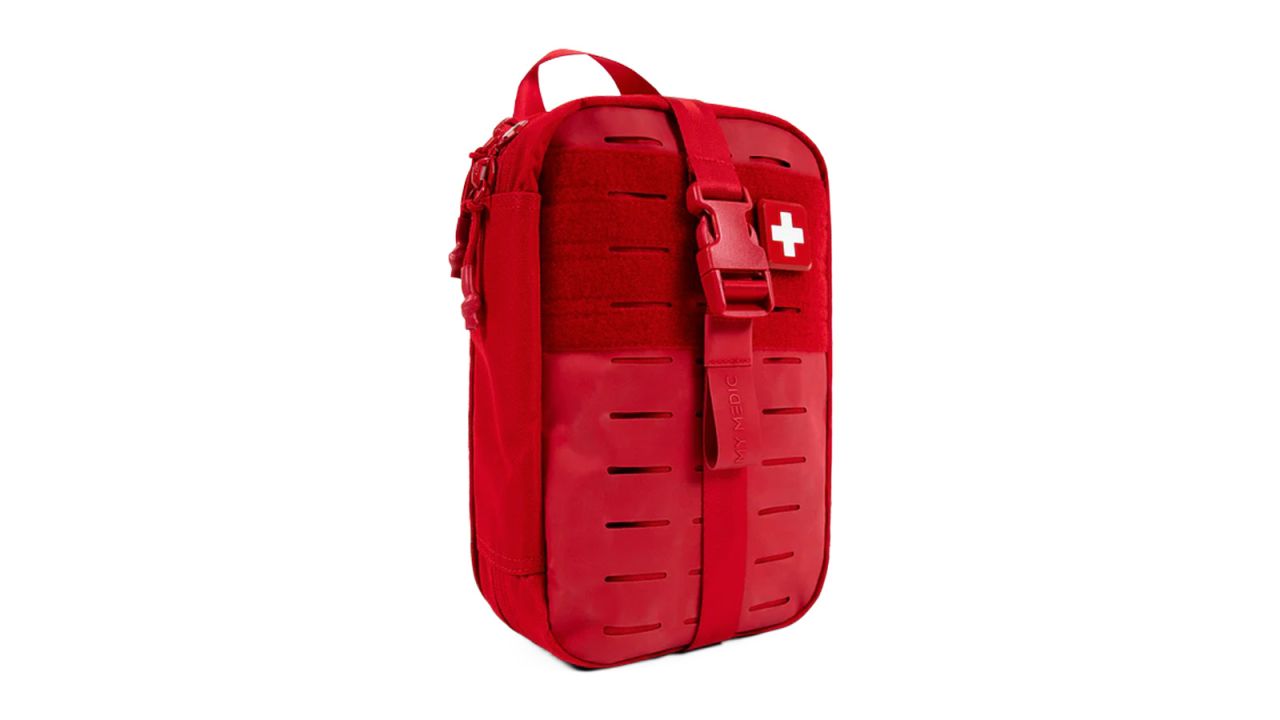
If you’re interested in a high-end kit that’s designed with durability and variety in mind, this could be exactly what you’re looking for, though it comes at a price.
Right out of the box, I could tell that the bag itself was extremely durable, and the clips, Velcro and zippers felt sturdy and secure as well. You can throw this thing around without worrying too much about damaging it. Inside, the kit opens into two large compartments, each with its own collection of pockets, sleeves and elastic bands, containing a huge amount of gear. In addition to a great variety and quantity of bandages, gauze pads and tape, it also includes a pair of EMT-style shears — the best quality of all the options I tested — a battery-powered thermometer and a penlight with a handy chart printed on the side for comparing dilated pupils.
Items like a finger splint, burn creams and a large Burnshield trauma dressing make this kit especially well-suited for camping excursions. All this gear is packed in separate baggies for specific injuries and treatments, making it relatively easy to keep things organized. That said, some items are hidden in hard-to-reach compartments, and if what you’re looking for isn’t in plain view, you may need to take most of the kit apart to find it. It’s also a challenge to repack, especially if you forget where everything goes.
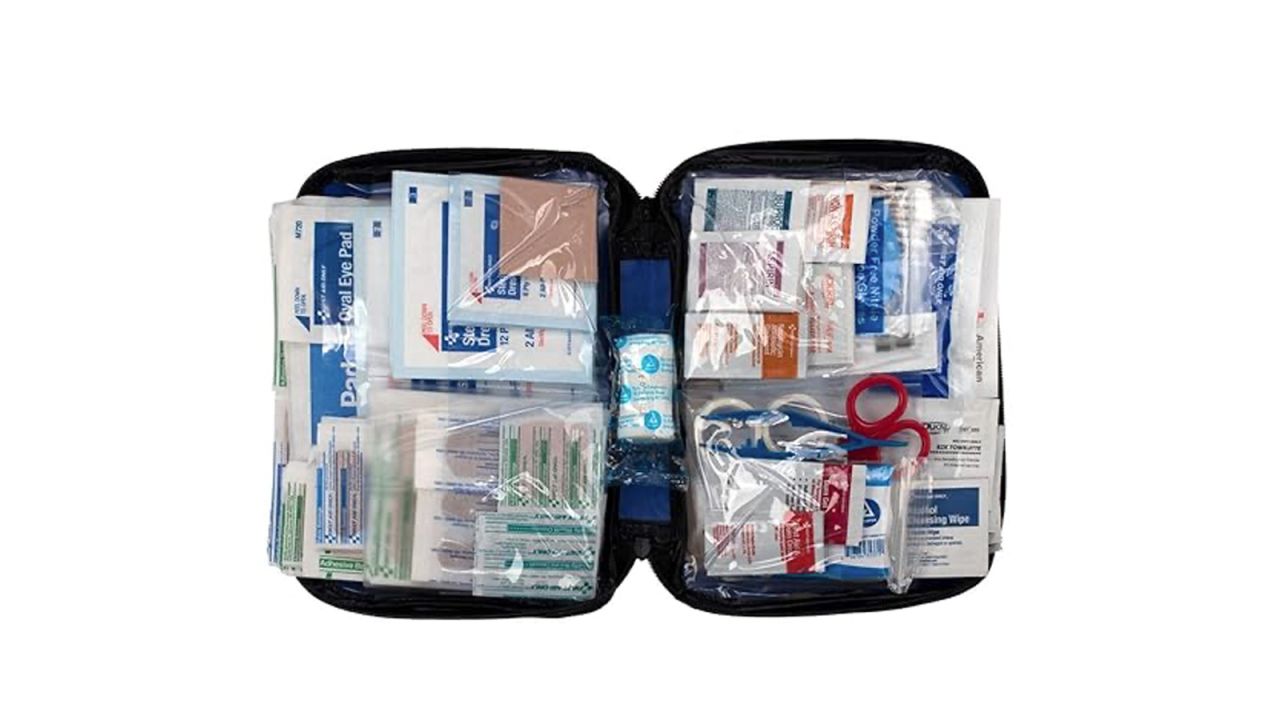
This zippered kit is simple to open and use, and it contains a surprisingly large quantity of items, most notably the 187 individual adhesive bandages in a range of sizes.
The clear plastic pockets made it easy to see many items at once, though anything stored in the rear sleeves will require a little more digging to access. Considering the low price, you get a good bang for your buck with this kit and its nearly 300 total items. In addition to the basics, it also includes several useful items not always found in kits in this price range, such as sting relief pads, tongue depressors that can be used as finger splints and disposable thermometers.
I do wish the 1/2-inch tape rolls were a little wider, but they still provided decent security during testing. The small pair of scissors felt pretty cheap and flimsy as well, but in their defense, they did cut through the moleskin sheets and tape during testing fairly easily. This kit included all the Red Cross essentials except for the CPR breathing barrier, so you’ll need to purchase one separately if that’s a priority.
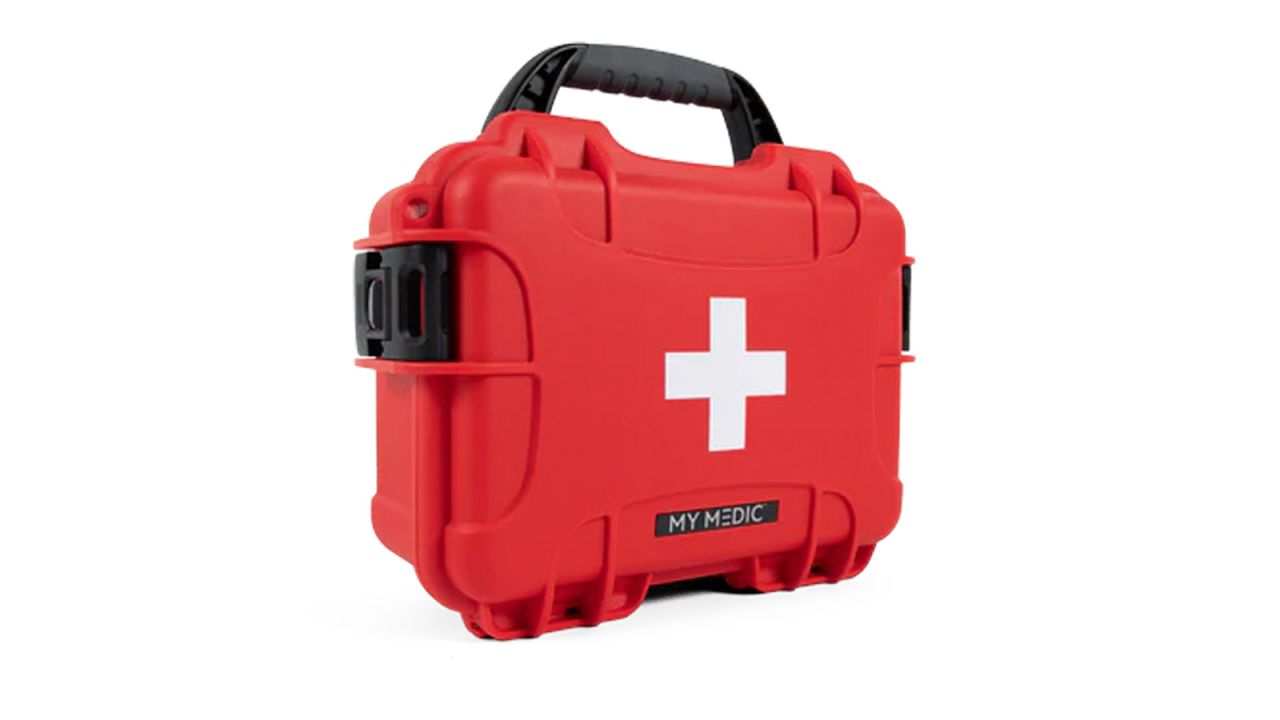
Although the quantity and variety of items are certainly helpful to have on hand, this kit isn’t the easiest to find what you’re looking for and lacks the user-friendly pockets and pouches found in most soft-sided kits. The lack of a physical first-aid manual (a downloadable QR code is included) ultimately kept this from reaching the top spot.
This kit’s hard-sided case not only protects its contents from getting crushed, damaged, or accidentally spilled, but it’s also completely waterproof. Thick latches keep the lid securely closed when not in use, and the rubber-gripped handle is comfortable to carry. I also appreciated the functionality of this kit, which includes almost everything recommended by our Red Cross expert, along with a wide variety of other useful items. You’re getting tools like chest seals and a nasopharyngeal airway (NPS) for severe first aid incidents, and less intensive items like sunscreen, chafing lubricant, and lip balm for everyday ailments.
Just like the other My Medic kit I tested, I was also impressed with the overall quality of the items, including nice, sturdy EMT shears, a heavy-duty tourniquet, and “superskin” cloth bandages that are easy to apply and maintain a strong hold on your skin throughout the day. A pair of ZZips (a zip-tie-style bandage that pulls the sides of a laceration together), Skin Glue, and 6 “super strips” (ultra-adhesive tape strips) also make this kit particularly suited to handle wound closures.
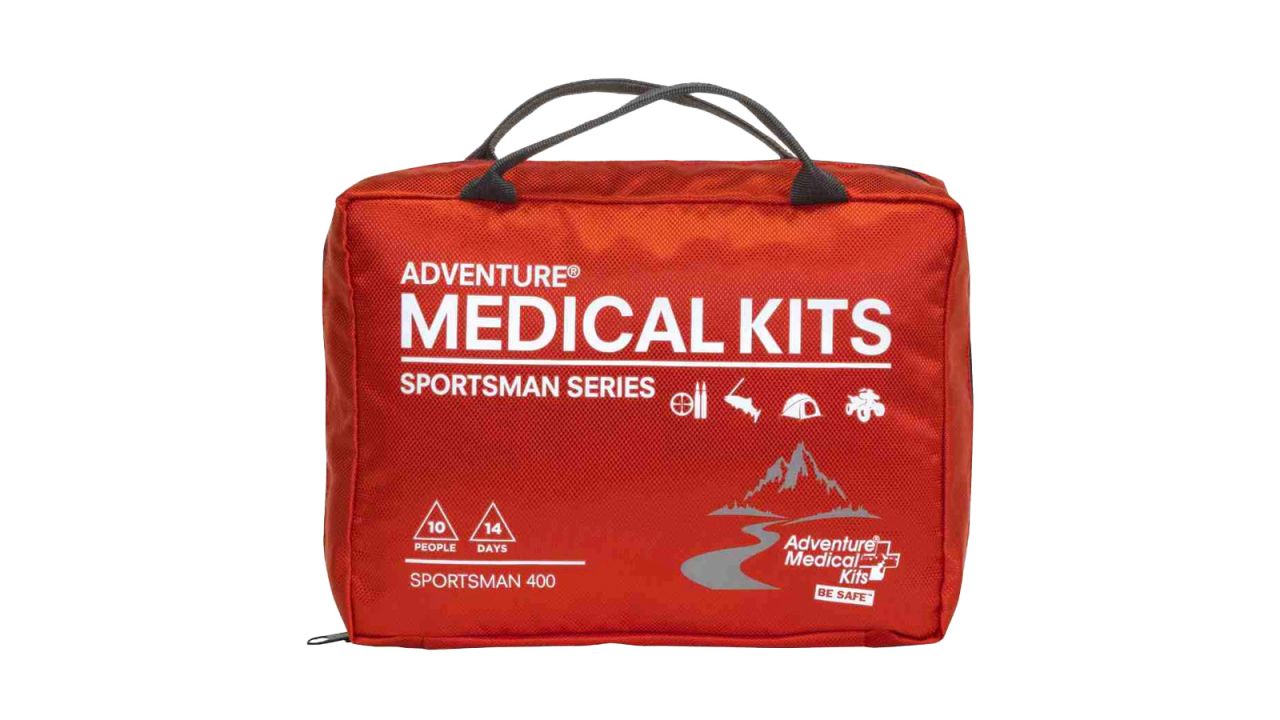
The kit’s materials feel nice and sturdy, but unfortunately, the zipper on my sample unit failed several times, splitting and requiring frequent re-zips to close properly.
I’m a big fan of Adventure Medical Kits, and this Sportsman Series model is a great example of their dedication to user-friendly organization. It unzips and unfolds to reveal three separate compartments, each for a different type of ailment, and with a transparent window for easy identification. In addition to the basics, this kit also includes a nice variety of bandage sizes and types, and the large syringe is especially useful for flushing out wounds before treatment.
The included “Guide to Wilderness Medicine” is an informative and concise first-aid manual, and the user-friendly table of contents quickly directs you to your desired section (always a plus in an emergency). Despite the large quantity of items (it claims to be suitable for 10 people for 14 days), it weighs just a hair over 2 pounds, making it an excellent choice for hikers and backpackers.
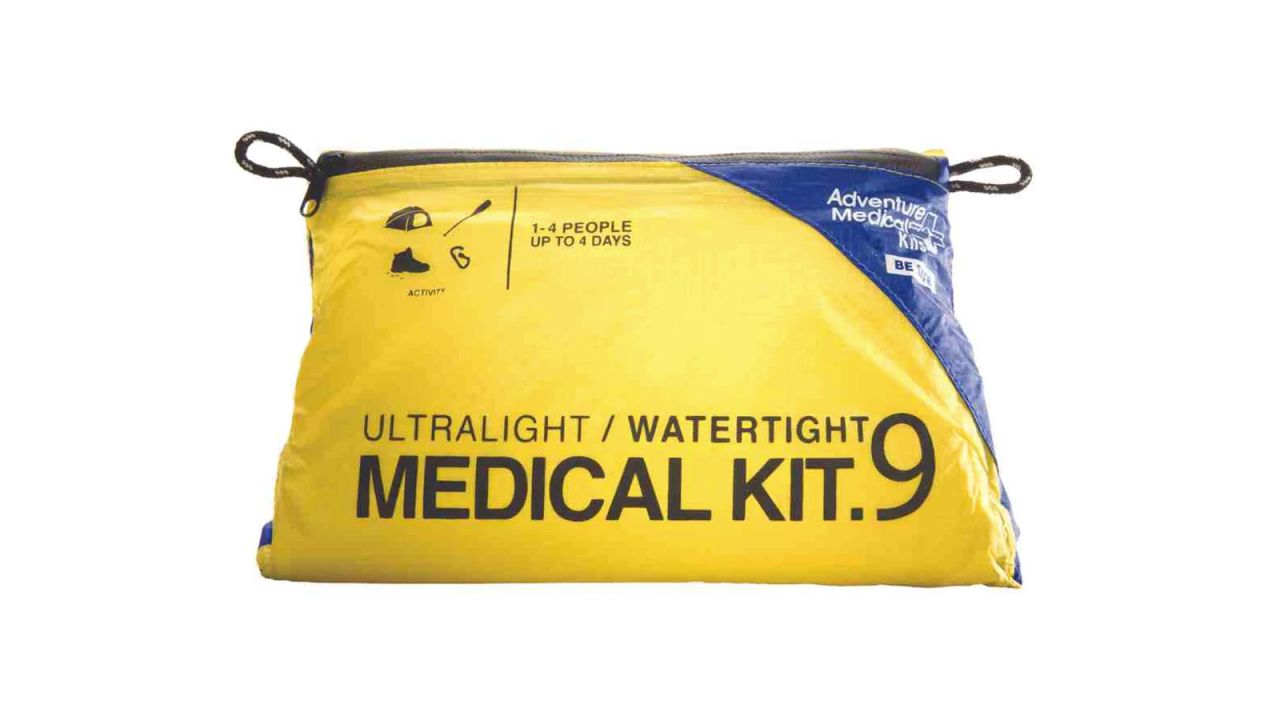
The compact size and light weight of this kit (less than 7 ounces) make it especially portable, and built-in loops on either side of the outer bag are perfect for attaching to a backpack with a carabiner clip. However, there are no organizational compartments, making it less convenient to find what you want without dumping it out.
This bare-bones kit doesn’t have the functionality of some of the larger options I tested, but the waterproof design is useful for outdoor excursions or watersports. The Ziploc-style bag is stored inside a watertight nylon bag (with a rubber zipper cover), offering dual protection against moisture ingress. Although it lacks a first aid manual, shears, and an emergency blanket, the items it does include are of high quality, such as a variety of fabric bandages, sterile dressings, and a sheet of pre-cut moleskin.
A small roll of duct tape and three safety pins are also handy for basic repairs to gear or clothing. Unfortunately, the kit I received did not include the irrigation syringe as advertised, making it slightly less functional than I had hoped.

Although this kit lacks some of the more severe injury treatment tools, like a splint or tourniquet, I was impressed by its less common items, such as splinter probes, saline wash, and eye pads. I’m also a big fan of the empty sections intended for personal use.
Recommended for vehicle use, this Survival brand kit is big enough to store larger items, while still compact enough to fit in your trunk without taking up too much space. Its thick exterior is also rugged enough to toss around without worrying about its durability. What sets this kit apart from similar options is its commitment to clear, straightforward organization. Unlike some kits that require you to dig around for your desired item — or dump the entire kit out if you’re in a hurry — this one goes almost overboard with its labeling system, letting you know exactly where each tool or medication is located.
My favorite feature of the Survival Vehicle First Aid Kit is the removable CPR card placed on its exterior, which walks you through the required steps without even needing to unzip the case. A second CPR kit on the inside (also clearly labeled) provides a resuscitation shield for safer rescue breaths.
Editor’s Note: We previously tested the ITS First Aid Kit and the VSSL First Aid, but they’ve since been discontinued and removed from this guide.
-
Jeffrey L. Pellegrino, senior advisor to the American Red Cross Scientific Advisory Council and professor of emergency management and homeland security at the University of Akron
CNN Underscored editors thoroughly test all the products in our testing guides and provide complete transparency about how we test them. We have a skilled team of writers and editors with many years of testing experience, ensuring each article is carefully edited and that products are appropriately vetted. We talk to top experts when relevant to ensure we test each product accurately and discuss the pros and cons of each item.
For this piece, testing writer Alex Rennie first spoke with Red Cross experts to find out what makes a great first-aid kit. After establishing the testing criteria, Rennie scrutinized 17 products to find the best one.
link
About the Author